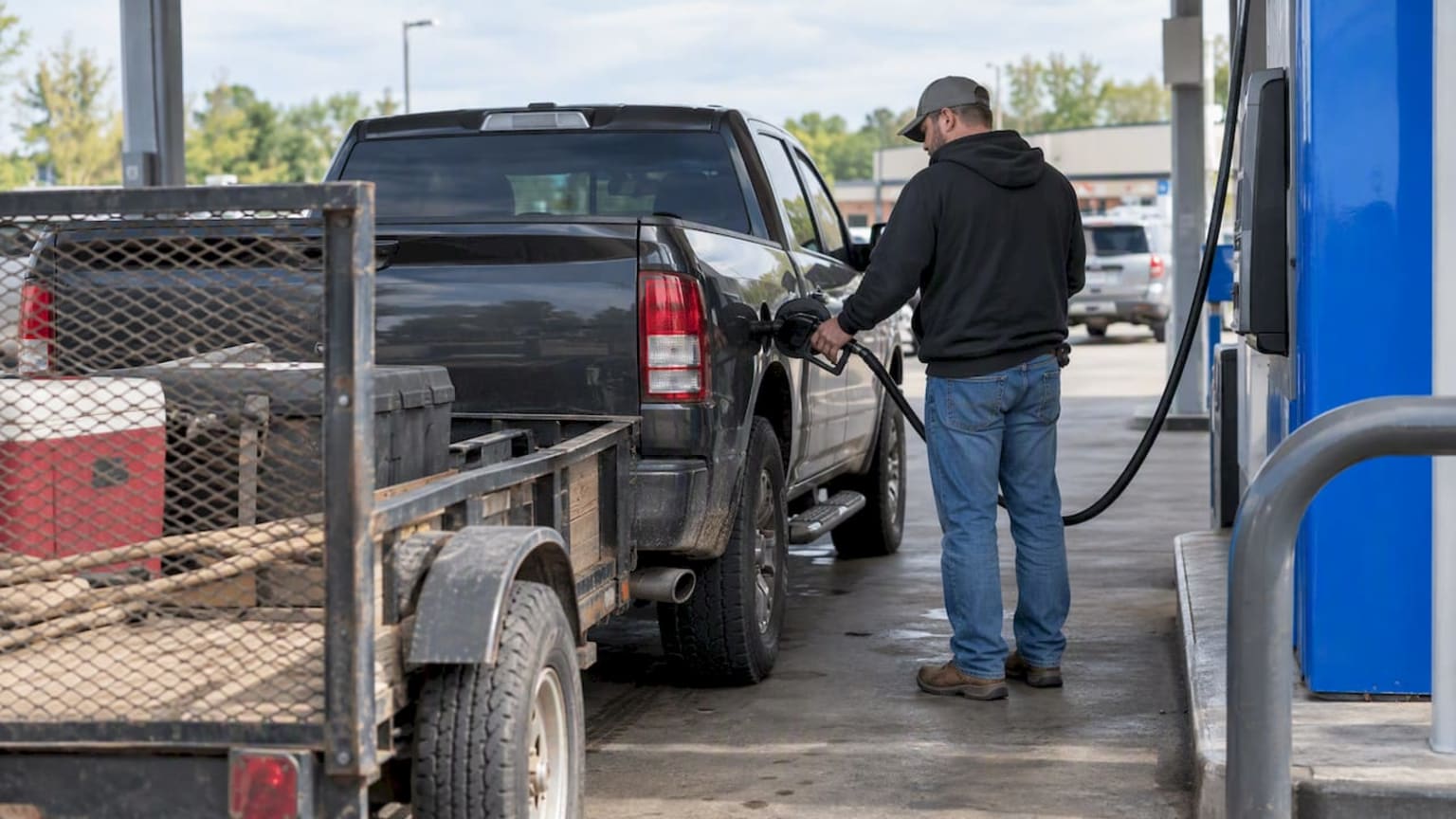
Regular vs. Premium Gas: When Towing, Heat, and Altitude Change the Math
Follow your owner’s manual: premium gas is necessary for a minority of vehicles and usually doesn’t pay for itself in everyday driving. Testing from AAA and Consumer Reports backs this up, with most cars showing little to no gain from higher octane. Check your fuel filler door or owner’s manual before your next fill-up to see which grade your engine actually calls for.
TL;DR:
The word required means regular fuel risks knock, reduced power, and engine stress; recommended usually means regular is safe, with a possible performance dip.
AAA measured a 2.7% fuel economy gain and 1.4% more horsepower in some recommended vehicles under severe loads; Consumer Reports found no everyday gains.
At an average $0.50 per gallon premium, a driver covering 12,000 miles yearly at 25 mpg spends about $240 extra annually.
Use premium for occasional towing or sustained climbs, when added heat and cylinder pressure can raise knock risk even in engines that accept regular.
Top Tier regular fuel offers more detergent than federal minimums; its additives help limit deposits, while premium octane alone does not clean an engine.
Libertychryslerdodgejeep
Keep Your Vehicle Ready to Tow
Liberty Chrysler Dodge Jeep Ram offers professional vehicle service and helps drivers find the right vehicle for their needs.
Table of Contents
Required vs recommended: how manufacturers tell you which fuel to use
Cost trade-offs: a simple calculation to see if premium pays for you
Top Tier fuel and why detergent additives matter more than octane for many drivers
Practical steps: check the manual, handle a wrong fill, and know your options
What octane means and the pump labels you see
The number on the pump, usually 87, 89, or something between 91 and 94, is the Anti-Knock Index, calculated as the average of two separate octane tests. Regular gas is 87 AKI, midgrade sits at 89, and premium runs from 91 to 94 depending on the region.
Octane rating measures how well fuel resists igniting too early inside the cylinder. When fuel detonates before the spark plug fires, you get engine knock, a knocking or pinging sound that signals uncontrolled combustion. High-compression engines and many turbocharged engines generate more heat and pressure in the cylinder, so they need higher octane to prevent that early ignition.
There’s a regional wrinkle worth knowing. In high-altitude areas, some stations sell 85-octane regular because thinner air reduces knock risk, according to Fueleconomy. Also worth noting: most fuel sold at U.S. pumps is E10, a blend containing up to 10% ethanol, which has its own effect on octane and combustion.
Required vs recommended: how manufacturers tell you which fuel to use
Two places tell you what your engine needs: the fuel filler door, which usually has a small sticker listing the minimum octane, and the owner’s manual, which spells out the language in more detail. The wording matters more than most drivers realize.
“Premium fuel required” means the engine is tuned specifically for high octane, and running regular risks knock, reduced power, and potential long-term engine stress.
“Premium fuel recommended” means the engine runs safely on regular, typically with a small, often unnoticeable dip in performance.
Modern engines also use knock sensors that detect early ignition and retard timing automatically, which is why many “recommended” vehicles tolerate regular fuel without obvious drama. According to the EIA’s octane analysis, roughly 10% of light-duty vehicles on the road actually require or recommend premium, meaning the overwhelming majority are built to run fine on regular.
What lab and track tests say about regular vs premium
The clearest empirical answer comes from controlled testing, not anecdotes. AAA’s Premium Fuel Phase II Research Report used a chassis dynamometer with emissions bagging to measure exact fuel consumption across regular and premium fuel under identical driving cycles.
AAA’s Phase II testing found an average 2.7% fuel-economy gain and a 1.4% horsepower increase in some “premium recommended” vehicles under severe duty conditions like towing or hard acceleration, according to the same report. Results varied widely by vehicle, and the gains often didn’t offset the extra cost at the pump.
Separately, Consumer Reports track tests found that many vehicles produced identical 0 to 60 mph times and identical fuel economy on regular versus premium under typical, everyday driving conditions.
Small gains from premium tend to show up only under heavy load, not in normal commuting.
Most tested vehicles that don’t require premium showed no measurable benefit from using it.
Cost trade-offs: a simple calculation to see if premium pays for you
The honest way to decide is to run the numbers for your own driving. The price gap between regular and premium has widened in recent years, averaging around $0.50 per gallon nationally, though it varies by region and by season.
Calculate your annual gallons: divide your yearly mileage by your vehicle’s regular-fuel MPG.
Multiply that gallon figure by the price gap between regular and premium to get your annual extra cost.
Compare that number to any MPG gain premium might realistically deliver for your specific engine, based on manufacturer guidance or AAA’s test data.
As an illustrative example: someone driving 12,000 miles a year at 25 mpg uses about 480 gallons annually. At a $0.50 per gallon gap, that’s roughly $240 extra per year for premium, an amount that a 2 to 3% MPG improvement rarely recovers in a car that doesn’t require it.
When premium is worth using
Certain conditions raise knock risk even in engines that normally tolerate regular fuel. Recognizing them helps you decide when paying more at the pump actually makes sense.
Towing heavy loads or climbing steep, sustained grades increases cylinder temperature and pressure.
Hot weather and stop-and-go traffic under load compound that heat buildup.
High-compression engines and most turbocharged or high-performance engines are designed around higher octane from the factory.
Pro Tip: If you only tow occasionally or drive in extreme heat a few times a year, buy premium just for those trips instead of every fill-up.
Drivers hauling trailers regularly should also weigh fuel type against vehicle choice; our guide to towing-capable trucks covers which models handle heavy loads with less strain.
Top Tier fuel and why detergent additives matter more than octane for many drivers
Octane isn’t the only variable worth paying attention to. Top Tier is a voluntary standard, established by automakers in 2004, that requires higher levels of detergent additives than the federal minimum, according to AAA. Those additives reduce deposits on fuel injectors and intake valves over time.
Top Tier certification applies to both regular and premium grades, not just premium.
A car that only needs regular gas generally gets more lasting benefit from Top Tier regular than from non-Top-Tier premium.
Deposit buildup from low-quality fuel can gradually affect how an engine responds to a given octane level.
If carbon deposits are already a concern on a higher-mileage vehicle, our maintenance tips for high-mileage vehicles cover practical ways to manage buildup.
Practical steps: check the manual, handle a wrong fill, and know your options
A few simple habits prevent most fuel-grade mistakes and fix the ones that happen anyway.
Check the fuel filler door sticker, then confirm the exact wording in your owner’s manual: “required” and “recommended” carry different consequences.
If you accidentally put regular in a car that requires premium, avoid hard acceleration for that tank, fill with the correct grade next time, and get the engine checked if knocking continues.
If you’re stuck with only midgrade available after a required-premium fill, it’s a reasonable stopgap since blending grades effectively splits the octane difference.
Modern knock sensors can compensate for lower-than-required octane in the short term, but repeated use at the wrong grade can reduce performance and add wear over time.
Service-center perspective from the dealership
We verify the manufacturer’s exact fuel language when a customer reports rough running or a knocking sound. Carbon buildup can shift what an engine actually needs at the pump, and sometimes a cleaning or a switch to Top Tier fuel resolves what looked like an octane problem. Our service videos walk through what these diagnostic checks look like in practice.
— michael
Get a fuel recommendation check at our service center
Figuring out whether your specific vehicle needs premium shouldn’t require guesswork. Our service center can review your model’s owner’s manual language, inspect for knock-related wear, and assess whether carbon buildup or fuel quality affects your engine’s performance.
We check manufacturer fuel guidance against the vehicle’s actual condition.
We diagnose persistent knocking or rough running and advise on fuel or service options.
We keep the process simple and transparent, with no pressure to choose a fuel grade.
Schedule a visit through our service center and get a straight answer about what your engine actually requires.
FAQ
What happens if you put premium gas in a regular gas car?
Nothing harmful happens mechanically, but you’re simply paying more for fuel your engine can’t use to its advantage. Most cars designed for regular gas see no measurable gain in power or MPG from premium under normal driving conditions.
Can I switch back and forth between regular and premium gas?
Yes, switching between grades is safe for the vast majority of vehicles, since modern engines adjust combustion timing automatically. The exception is a vehicle where premium is explicitly “required,” where you should stick to the specified octane to avoid knock.
Does premium gas really clean your engine?
Octane level itself doesn’t determine cleaning power, detergent additives do. Choosing a Top Tier-certified fuel, whether regular or premium, matters more for preventing deposits than paying extra for higher octane alone.
Is premium gas 89 or 93 octane?
Premium is typically 91 to 94 AKI octane, while 89 is generally classified as midgrade. The exact premium number can vary slightly by region and retailer.