3 Dealer Backed Requirements to Flat Tow a Jeep Wrangler
Most four-wheel-drive Wranglers with a two-speed transfer case that includes a Neutral position can be flat towed, but only if three things are in place: a properly mounted tow bar and baseplate, a supplemental braking system, and strict adherence to your specific model’s Recreational Towing steps in the owner’s manual. Skip any of those and you risk transmission damage, a roadside failure, or a regulatory violation, so if you’re missing one, get the vehicle inspected or equipped before you hook up.
TL;DR:
Properly equipped flat towing requires a tow bar, baseplate, supplemental brake system, and adherence to the owner’s manual steps to avoid damage or violations.
The baseplate and wiring connections are critical, as loose or mismatched parts can lead to lighting failures or structural issues during towing.
Following a consistent hookup procedure, including a low-speed test of brakes and signals, helps catch common problems before hitting the road.
The transfer case must be shifted into Neutral according to specific model and transmission instructions; failing to do so risks driveline damage.
Federal regulations mandate a supplemental braking system and proper coupling devices to ensure safety and legal compliance during flat towing.
Libertychryslerdodgejeep
Prepare Your Jeep for Towing
Liberty Chrysler Dodge Jeep Ram provides professional service and clear guidance to help support your vehicle after the sale.
Visit Liberty Chrysler Dodge Jeep Ram
Table of Contents
Vehicle preparation and model nuances that catch owners off guard
How a dealership service department can get you towing sooner
Quick equipment checklist before you hit the road
Before you plan a trip, confirm you actually have the gear a Wrangler needs to be towed on all four wheels. Most flat towing problems trace back to missing or mismatched equipment rather than driver error, so this is worth doing methodically rather than from memory.
Walk through your setup against this list:
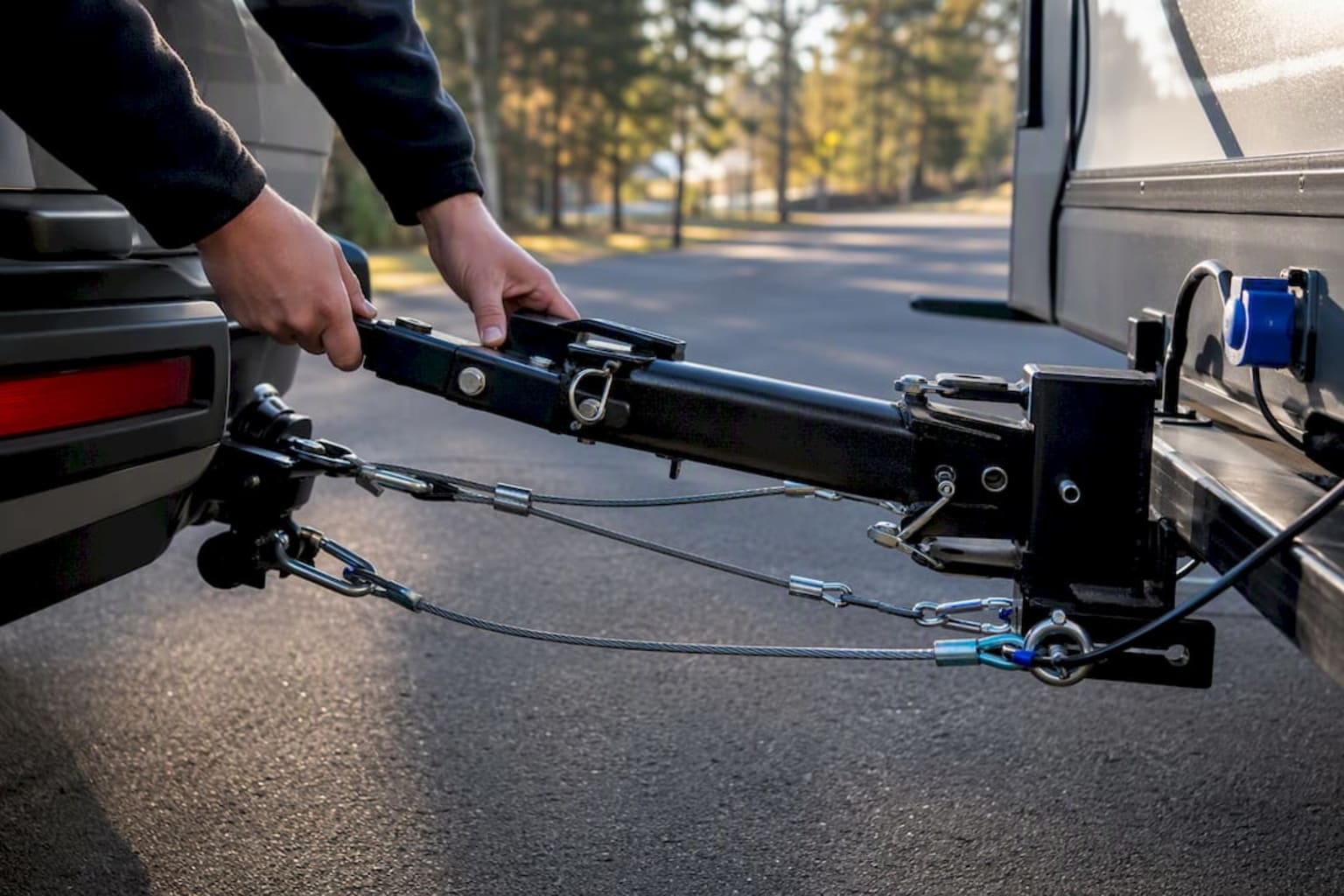
A tow bar and a vehicle specific baseplate bolted to the Wrangler’s factory forward tow brackets, with hardware torqued to spec and no cracked welds.
A supplemental braking system, either portable or permanently installed, paired with a breakaway switch and wiring that matches your towing vehicle’s brake controller.
A tow wiring adapter that powers the Wrangler’s tail, stop, and turn signals, plus a way to confirm all three actually function before departure.
Safety chains or cables crossed under the tow bar, correctly rated hitch pins with cotter pins, and a functioning breakaway cable attached to the tow vehicle frame.
A small kit of chocks, spare fuses and bulbs, basic hand tools, and a reflective flag, along with a printed or downloaded copy of your Wrangler’s owner’s manual.
The baseplate and tow bar connection deserves particular attention because it’s the single point carrying the Wrangler’s full weight down the highway. Jeep’s own towing guidance notes that flat towing is possible when the vehicle is properly equipped and the towing vehicle is rated to handle the added weight, which makes the baseplate a safety component, not just a convenience part. Mixing aftermarket baseplates with generic wiring harnesses is one of the more common causes of in-field light failures, so matching parts to your exact trim and model year matters more than it might seem.
Once the hardware checks out, the wiring is the next weak point. Tail lights that flicker or fail mid-trip usually mean a loose ground or a connector that wasn’t fully seated, and catching that in your driveway beats discovering it on the interstate.
Step-by-step hookup and flat-towing procedure
Flat towing rewards a consistent sequence every time you hook up, because skipping a step under time pressure is how most avoidable mistakes happen. Follow the same order whether you’re leaving a campground or your own driveway.
Confirm your towing vehicle’s rated capacity exceeds the Wrangler’s curb weight, its GVWR, and the added weight of the tow bar and baseplate combined.
Park the Wrangler and tow vehicle in a straight line, then align the hitch receiver with the baseplate’s connection points before you attempt to attach anything.
Attach the tow bar arms to the baseplate, extend and lock them, and verify the locking pins are fully seated rather than just resting in place.
Cross the safety chains or cables underneath the tow bar and secure them to rated attachment points on the tow vehicle, never to the bumper alone.
Connect the breakaway cable to the tow vehicle’s frame, separate from the hitch itself, so it can trigger the Wrangler’s brakes if the connection fails.
Plug in the lighting harness and test the tail, brake, and turn signals with a helper before moving the vehicle.
Follow your Wrangler’s Recreational Towing sequence to shift the transfer case into Neutral, which differs slightly depending on whether your Wrangler has a manual or automatic transmission.
With a manual transmission, leave it in Neutral with the parking brake released once towing is confirmed; with an automatic, confirm the shifter position the manual specifies for your model year.
Have a helper watch from the driver’s seat or from outside while you test the supplemental brake at low speed to confirm it actually engages.
Do a short, controlled test run at walking pace before merging onto any road, watching for warning lights, unusual noise, or drift.
To disconnect, park on level ground, set wheel chocks, and reverse the hookup steps in order: lights, breakaway cable, safety chains, then the tow bar itself.
Stow all gear, and do a final walk-around to confirm nothing was left dragging or loose.
Pro Tip: Run the low-speed test with a helper watching brakes and lights every single time you hook up, not just on the first trip. It’s the fastest way to catch a problem before it becomes a roadside repair, and it’s standard practice among experienced RV owners and service technicians.
Skipping the test run is the shortcut most owners regret. A loose ground wire or a transfer case left half-engaged rarely shows symptoms while the Wrangler is sitting still, but both tend to announce themselves within the first mile.
Vehicle preparation and model nuances that catch owners off guard
The reason a Neutral position matters so much comes down to what’s spinning inside the transfer case while the Wrangler rolls on its own wheels with the engine off. A two-speed transfer case with true Neutral disconnects the drivetrain from the wheels, letting them turn freely without pumping fluid through a transmission that isn’t running. Attempt the same trick on a single-speed transfer case or certain 2WD configurations and you risk serious transmission or driveline damage, since there’s no equivalent neutral disconnect built in.
This is exactly why the owner’s manual matters more than forum advice or a buddy’s shortcut. The Recreational Towing section documents the precise sequence for your specific model year, and that sequence has changed across Wrangler generations as transfer case and electronic parking systems evolved.
A few nuances worth knowing before you assume your Wrangler is ready:
Manual transmission Wranglers typically require the clutch depressed and the shifter moved through a specific pattern before the transfer case will accept Neutral, while automatics rely on a different key and shifter sequence.
Wranglers with the 4xe plug-in hybrid powertrain add electrical interlocks and charging state considerations that a standard gas Wrangler doesn’t have, so the recreational towing steps aren’t interchangeable across powertrains.
Leaving the transfer case in a drive range instead of Neutral is the single most common and most damaging mistake owners make.
Forgetting to unlock the steering wheel leaves the front wheels unable to track straight behind the tow bar, which strains the baseplate and can cause a dangerous pull to one side.
Some model years require disabling specific electronic parking brake or stability features before towing, another detail the manual spells out for your exact configuration.
If you own a 4xe or you’re unsure which transfer case your trim shipped with, it’s worth a quick read through Liberty CDJR’s guide to Jeep 4x4 features for background on how these systems differ before you attempt the recreational towing sequence yourself.
Regulatory and safety rules that affect how you tow
Flat towing a Wrangler behind an RV falls under federal driveaway-towaway rules, and those rules exist because a towed vehicle without its own working brakes is a liability at highway speed. 49 CFR § 393.42 sets braking requirements for these operations, and for a vehicle the size and weight of a Wrangler, a supplemental braking system is widely treated as essential rather than optional, both for compliance and for basic stopping distance.
Coupling devices carry their own requirements too. Regulations describe how towing methods and attachment points, including front and rear axle connections, need to be configured, which is why crossed safety chains and a functioning breakaway cable aren’t just good habits, they’re part of a coupling system designed to fail safely if the primary connection lets go.
A few practical habits reduce risk beyond what regulation requires:
Keep speeds modest and increase following distance well beyond what feels necessary in a car alone.
Watch for early signs of trailer sway, like a slight side-to-side pull, and ease off the throttle rather than braking hard.
Check state and local rules before a long trip, since signage, lighting, and braking requirements can vary by jurisdiction, even when federal rules set the floor.
Federal rule to know: 49 CFR § 393.42 and § 393.71 establish the braking and coupling device requirements that apply to driveaway-towaway operations like flat towing, which is why a supplemental braking system and a properly rated coupling setup aren’t optional extras.
Troubleshooting common flat-towing mistakes
Most flat towing problems announce themselves early, and catching them fast is the difference between a five-minute fix and a damaged drivetrain. A few situations come up often enough to know the fix before you’re stuck on the shoulder.
If you hear grinding, clunking, or binding from underneath, stop immediately and check the transfer case position and parking brake before going any further.
If the tail or brake lights stop working, isolate whether the problem is on the tow vehicle side or the Wrangler side, then check fuses and inspect connectors for corrosion.
If the supplemental brake fails to engage, check its power source and controller settings and confirm the breakaway cable is properly connected. Never continue towing without a working system.
If a dashboard warning light appears while towing, pull over safely as soon as possible and consult the owner’s manual or contact a dealer service department rather than guessing.
Post-tow maintenance and checks worth doing every trip
A Wrangler that just spent hundreds of miles being towed deserves a quick inspection before it goes back into daily use. This is the point where small problems are still cheap to fix.
Check the transfer case and axle seals for leaks, and listen for any new driveline noise on your first drive after disconnecting.
Verify the baseplate and tow bar fasteners are still torqued to spec, since loose hardware is a common source of noise and eventual failure.
If you towed a significant distance, schedule a service check for fluids and a drivetrain inspection rather than waiting for a symptom to show up.
Keep a simple towing log noting miles towed and anything unusual you noticed, since it makes diagnosing a future problem much faster.
Pro Tip: A towing log doesn’t need to be complicated. A notebook entry with the date, miles towed, and anything that felt off is often enough to help a technician spot a pattern later.
Why we recommend OEM parts and a pre-tow inspection
Preparing a Wrangler for recreational towing is routine work for a dealership service department that installs baseplates, wiring, and supplemental brakes on a regular basis. That work follows the owner’s manual sequence for each model year rather than a generic checklist, and it relies on genuine Mopar parts specifically because mismatched aftermarket components are a common source of wiring faults and fitment problems.
The value of a trained technician here isn’t theoretical. Getting a baseplate torqued correctly, a wiring harness matched to the right connector, and a supplemental brake calibrated to the tow vehicle’s controller all reduce the chance of a roadside surprise, which is the whole point of preparing properly in the first place.
— michael
How a dealership service department can get you towing sooner
Getting a Wrangler properly set up for flat towing usually comes down to parts availability and installation accuracy, and that’s exactly where a dealership service department earns its keep. Dealership service departments offer pre-tow inspections, baseplate and wiring installation, supplemental brake setup, and post-tow service checks, all handled by technicians familiar with the manufacturer’s Recreational Towing procedures.
If you’re planning a season of towing, here’s what’s easy to line up through the dealership directly:
Book a pre-tow inspection to confirm your Wrangler’s transfer case, wiring, and fasteners are ready before a trip.
Order genuine Mopar baseplates and tow wiring adapters matched to your exact trim and model year.
Schedule supplemental brake installation and a post-trip service check through the same service department page.
If you’re shopping for a Wrangler built for this kind of use, browsing new Jeep inventory is a straightforward way to compare trims and transfer case options before you buy. Either way, a call or a booked appointment gets your Wrangler road-ready without guessing at the details yourself.
Where to check the exact procedures and regulations
For your specific model year, the Jeep Wrangler owner’s manual covers the Recreational Towing procedure step by step. Jeep’s own towing FAQ lists which models and configurations support flat towing and their approximate weight specs. For the legal side, 49 CFR § 393.42 covers braking requirements and 49 CFR § 393.71 covers coupling device rules for driveaway-towaway operations.
Sources
2026 Jeep Wrangler Owner’s Manual (Recreational towing section)
A guide to your Jeep® brand vehicle’s towing capacity — Jeep
FAQ
Which Jeep Wranglers are flat towable?
Most four-wheel-drive Wranglers equipped with a two-speed transfer case that includes a Neutral position can be flat towed when properly equipped, according to Jeep’s own towing FAQ. Certain 2WD configurations and non-Jeep 4x4 systems generally cannot be towed this way without risking driveline damage, so confirm your specific trim’s transfer case before assuming it qualifies.
Is it safe to flat tow a Jeep Wrangler?
Flat towing a Wrangler is considered safe when it’s done with a properly mounted tow bar and baseplate, a working supplemental braking system, and the exact Recreational Towing steps from the owner’s manual for your model year. Skipping any of those three elements introduces real risk, both to the drivetrain and to safe stopping distance on the road.
Can you flat tow a Jeep Wrangler with an automatic transmission?
Yes, automatic transmission Wranglers can be flat towed as long as the transfer case has a Neutral position and you follow the specific key and shifter sequence documented in your owner’s manual. The exact steps differ from the manual transmission procedure, so don’t assume the two are interchangeable.
How do I put my Jeep Wrangler in neutral for flat towing?
The correct sequence depends on your model year and transmission type, and it’s documented step by step in the Recreational Towing section of your owner’s manual. In general, it involves shifting the transfer case into Neutral through a specific key, clutch, or shifter pattern, and skipping or misordering the steps risks transmission damage.
What towing capacity does my tow vehicle need for a Wrangler?
Your towing vehicle’s rated capacity should exceed the Wrangler’s curb weight, its GVWR, and the added weight of the tow bar and baseplate combined. Jeep’s towing capacity guide lists approximate curb weights by model to help you confirm your setup before towing.