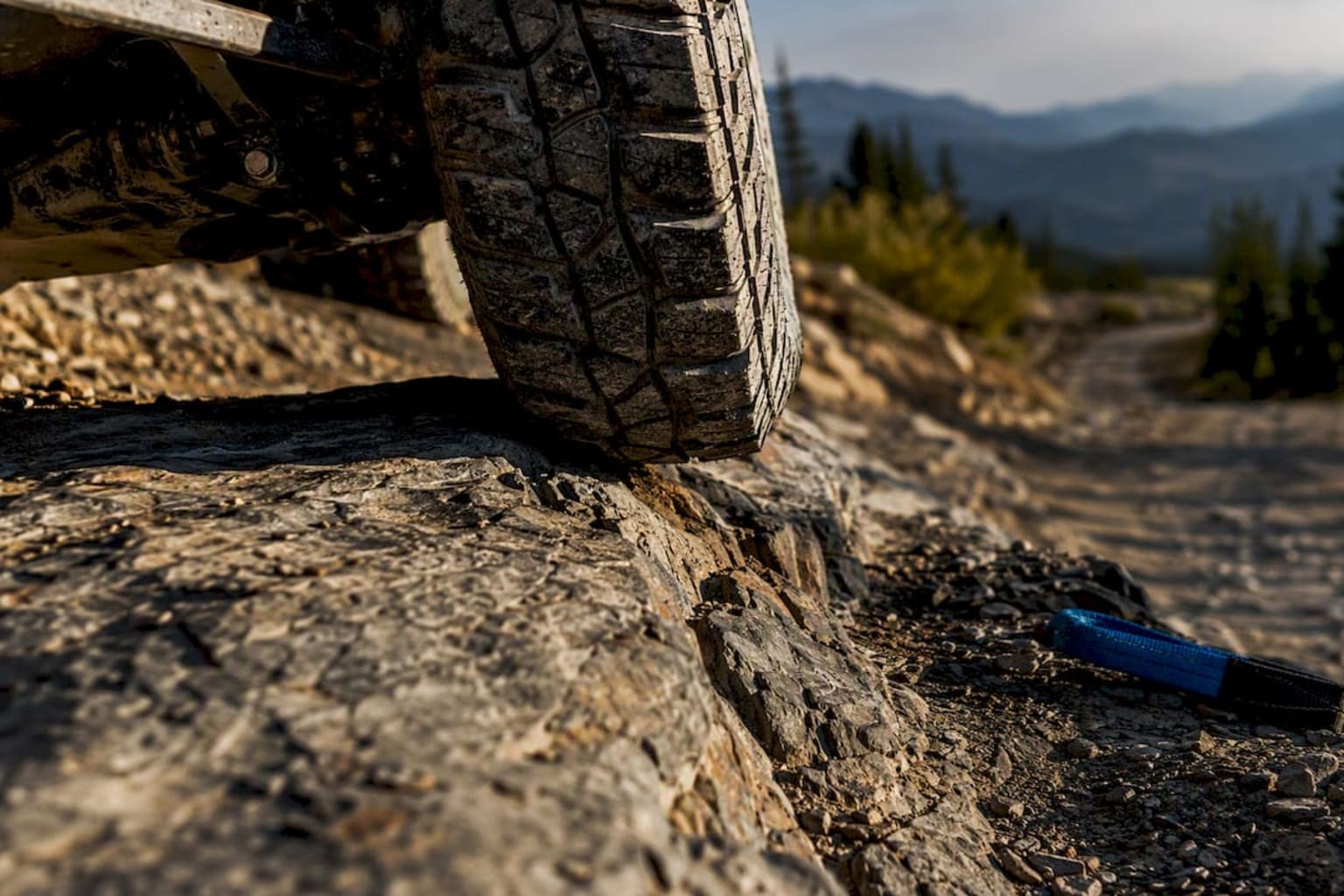
5 Buyer Profiles: Choose AWD or 4WD Based on How You Drive
Most drivers should choose all-wheel drive, not four-wheel drive. AWD handles rain, light snow, and slick highway on-ramps automatically, with no input from you, which covers what most buyers actually do with their vehicles. Four-wheel drive earns its keep only if you regularly tow in mud, climb rock ledges, or drive unplowed backcountry roads. Neither system, by the way, will stop you faster or help you turn sharper on ice. That job belongs to your tires.
TL;DR:
All-wheel drive improves on-road traction in rain and light snow, but it does not enhance braking or cornering grip on ice, where winter tires are more effective.
Most AWD systems operate automatically with no driver input, while four-wheel drive requires manual engagement and provides low-range gears for off-road use.
Four-wheel drive is best suited for off-road conditions, heavy towing, and unplowed terrain, especially with low-range and locking differentials, unlike AWD designed mainly for pavement.
Economically, AWD reduces fuel efficiency by about 1 to 3 mpg compared to two-wheel-drive models, and four-wheel drive systems add weight that further lowers mileage.
Proper maintenance, including fluid changes for transfer cases and differentials, is essential to prevent costly repairs, and avoiding driving in 4WD on dry pavement prevents drivetrain damage.
Libertychryslerdodgejeep
Find the Right Drivetrain for Your Drive
Liberty Chrysler Dodge Jeep Ram can help you explore new or pre-owned vehicles and choose an option that fits your driving needs.
Table of Contents
AWD vs 4WD: How All-Wheel Drive Actually Works
All-wheel drive sends power to all four wheels automatically, adjusting the split without you touching a button. There’s no single blueprint for it. Automakers build AWD in a few distinct flavors, and knowing which one is under a vehicle you’re considering matters more than the “AWD” badge on the tailgate.
Part-time or on-demand AWD: Runs in two-wheel drive most of the time and engages the second axle only when sensors detect slip.
Full-time AWD with a center differential: Sends power to all four wheels continuously, splitting torque front to rear through a differential rather than a driver-operated lever.
Torque-vectoring AWD: Actively shifts power to the outside rear wheel in a corner, which is more of a handling feature than a low-speed traction booster.
E-AWD (hybrid/electric): Uses an electric motor to drive one axle instead of a mechanical driveshaft, which is how some hybrids get AWD without the usual efficiency penalty.
The mechanics behind the scenes involve wheel-speed sensors and clutch packs that detect a slipping tire in milliseconds and redirect torque before you’d notice anything happened. That’s the appeal: zero driver input required.
There’s a real trade-off in fuel economy. AWD typically costs 1 to 3 mpg compared to the two-wheel-drive version of the same model, largely because of the added driveline weight and friction. Some systems claw part of that back by disconnecting the rear driveshaft entirely during steady highway cruising, then reconnecting it in a fraction of a second when needed.
Pro Tip: Ask specifically whether an “AWD” trim uses a hybrid electric motor on the rear axle. Some e-AWD systems lose grip capability once the battery runs low, which matters if you’re relying on it for a long winter drive.
Here’s the limit that catches people off guard: AWD improves acceleration traction on slippery surfaces, but it does nothing for braking distance or cornering grip on ice. Winter tires close that gap far more than any drivetrain does.
How Four-Wheel Drive Handles Serious Off-Road Terrain
Four-wheel drive is built around a transfer case, a separate gearbox that splits power between the front and rear axles and, critically, gives you a low-range gear set for extreme torque at a crawl. This is the piece AWD systems don’t have, and it’s the reason 4WD dominates rock crawling and deep mud while AWD stays on pavement.
Most trucks and SUVs with real 4WD offer at least three modes:
2H: Two-wheel drive, high range, for normal driving on dry roads.
4H: Four-wheel drive, high range, for loose surfaces at regular speeds, like gravel or packed snow.
4L: Four-wheel drive, low range, which multiplies torque for steep climbs and technical off-road sections at walking speed.
Unlike AWD, 4WD is almost always driver-selected. You reach over and flip a switch or turn a dial, and that’s by design. A locked-in 4WD system forces both axles to spin at the exact same speed, which is exactly what you want when a tire loses grip on a boulder, but exactly what you don’t want on dry pavement. Engaging 4WD on dry asphalt can cause driveline binding, accelerated tire wear, and drivetrain damage, because the axles can’t rotate at slightly different speeds through a turn the way they need to.
Low range earns its reputation on the kind of terrain where a stalled engine or a spinning tire means real trouble: a steep gravel climb, a rock ledge, snow deep enough to bury a bumper. Working the throttle in 4L takes a different touch than normal driving: slower speeds, finer pedal control, and awareness of how steep an angle the axles are working at.
Pro Tip: If you’re shopping for a vehicle with a locking rear differential, ask the salesperson to demonstrate it on the lot. A true mechanical lock feels and sounds different from an electronic traction-control simulation, and you want to know which one you’re getting.
The trade-off is weight and complexity. Extra gears, a heavier transfer case, and locking differentials add mass the engine has to move everywhere, every day, whether you’re off-roading or just driving to the grocery store.
AWD vs 4WD Side by Side
Factor | AWD | 4WD |
|---|---|---|
Primary purpose | On-road traction in rain, light snow, mixed conditions | Off-road capability, heavy towing, unplowed terrain |
Operation | Automatic, no driver input | Driver-selected (2H/4H/4L) |
Core hardware | Center differential or clutch pack, sometimes an electric rear motor | Transfer case with low range, often locking differentials |
Fuel economy impact | About 1 to 3 mpg lower than the 2WD version | Typically lower still, partly from 100 to 200-plus pounds of added weight |
Ownership notes | Fewer driver-caused failure modes; clutch packs need occasional fluid service | Requires proper mode use to avoid binding; transfer case and diffs need scheduled service |
A few things jump out once you line these up side by side:
If your worst weather is a slushy commute or a rainy highway drive, AWD covers that with no extra thought on your part.
If you’re regularly on rutted rural roads that never see a plow, 4WD’s low range starts to matter, not just its high-range mode.
If towing a trailer up a loose gravel boat ramp is part of your routine, 4WD’s low-range torque multiplication is the actual feature you’re paying for, not just the “4x4” badge.
Marketing language muddies this constantly. Check the actual spec sheet for a low-range transfer case or a locking center differential before assuming a vehicle badged “4x4” or “AWD” can do what you need. A crossover labeled AWD with no low-range gear is built for the road, full stop.
Which Drivetrain Should You Actually Buy?
Match the system to how you actually drive, not to how you imagine you might drive someday. Here’s how that breaks down across the buyers we see most often:
Daily commuter in a mixed-weather climate. AWD is the right call. It handles rain and light snow automatically, and Kelley Blue Book’s own guidance backs AWD as the better fit for everyday driving conditions.
Rural driver on unplowed roads. Lean toward 4WD, especially if snow removal in your area is inconsistent. The low-range option is insurance you’ll eventually use.
Weekend off-roader who takes on rock ledges or deep mud. 4WD with a true low-range transfer case and, ideally, a locking rear differential. AWD simply doesn’t have the mechanical range for this.
Anyone towing heavy loads off pavement, like a boat down a gravel ramp or equipment across a job site. 4WD’s low range provides the crawling torque a trailer hitch needs on loose surfaces.
Budget-focused shopper in a snowy region. A 2WD vehicle with a quality set of winter tires often outperforms an AWD vehicle running all-season rubber, at a lower purchase price and lower running cost.
Before you sign anything, run through this checklist on the spec sheet or during your test drive:
Does it have a genuine low-range transfer case, or just “AWD” with no low gear?
Are the differentials open, limited-slip, or fully locking?
Does the AWD system engage automatically, and how fast does it respond?
What’s the EPA-rated mpg difference versus the 2WD version of the same trim?
What does the service history show for the transfer case, differentials, or AWD clutch packs?
Does the dealer recommend dedicated winter tires for this vehicle in your climate?
That last point matters more than most buyers expect. Winter tires improve stopping and cornering, which is where both AWD and 4WD fall short.
What Ownership Actually Costs Over Time
The mpg gap is real and it compounds. AWD typically runs 1 to 3 mpg below the 2WD version of the same vehicle, and traditional 4WD trucks usually land lower still once you factor in 100 to 200-plus pounds of extra hardware. Check exact figures for the model you’re considering on Fueleconomy before you buy.
Maintenance follows a similar pattern. AWD clutch packs need periodic fluid changes; transfer cases and differentials in 4WD trucks need their own fluid on a schedule, and locking mechanisms need periodic inspection. If you own a Jeep with a four-wheel drive system, staying on top of transfer case service intervals prevents most of the expensive repairs.
The biggest avoidable cost is driver error: leaving 4WD engaged on dry pavement causes binding and premature tire wear. Ask to see service records, and ask the salesperson to demonstrate low-range before you buy.
Publisher Perspective: Practical Advice From Liberty CDJR
Many dealers walk buyers through this decision on the lot, and the pattern is consistent: people fixate on badges instead of use cases. A test drive that includes an actual low-range demonstration, not just a brochure claim, tells you more than any spec sheet. Weigh how you drive on a normal Tuesday against how you drive twice a year off-road, and let that ratio, not the marketing copy, decide.
— michael*
How Liberty CDJR Helps You Buy and Maintain the Right Setup
Some dealerships carry Jeep and Ram models built with both AWD and true 4WD systems, allowing buyers to understand the difference on the lot, on a real test drive, before committing to either one.
If towing or off-road capability is on your list, our towing-focused buyer’s guide and our breakdown of Jeep off-road capability features cover what to look for beyond the spec sheet. Once you own the vehicle, our 4WD maintenance guide keeps the transfer case and differentials on schedule, and for DIY work between visits, a properly sized impact socket set makes truck maintenance a lot less frustrating.
Book a test drive and ask to see a low-range demonstration on a Jeep or Ram, and consult a service team about financing and maintenance plans that fit your driving habits.