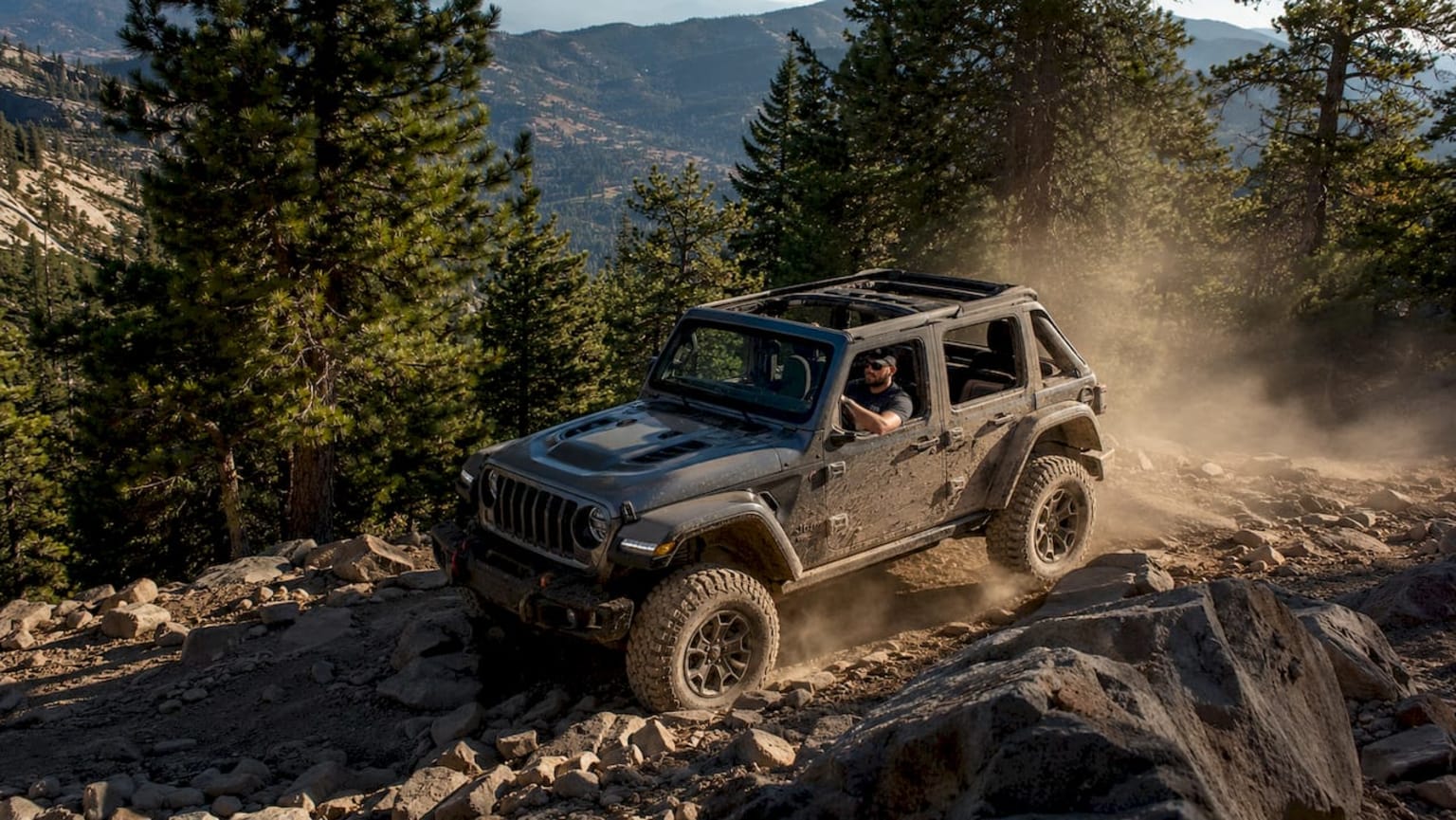
Jeep Off-Road Capability Features: 2026 Buyer's Guide
Jeep Off-Road Capability Features: 2026 Buyer’s Guide
Jeep off-road capability features are the specialized mechanical and electronic systems that determine how well a vehicle performs on rocks, mud, sand, and steep terrain. The Wrangler Rubicon and Wrangler Willys represent two of the clearest benchmarks for what these systems can do in the real world. From Command-Trac four-wheel drive to Dana 44 axles and Trail Rated certification, Jeep builds its off-road identity around hardware that is tested, not just marketed. This guide breaks down every major system so you know exactly what you are buying and why it matters on the trail.
1. What are Jeep off-road capability features?
Jeep off-road capability features are the collection of drivetrain, suspension, and electronic systems that allow a vehicle to maintain traction, clear obstacles, and protect its undercarriage on terrain that would stop a standard SUV. The term covers everything from transfer case gear ratios to skid plates and locking differentials. Jeep uses the phrase “Trail Rated” as its official certification label for models that meet verified performance standards across five tested categories. Understanding these features helps you match the right trim to the trails you actually plan to run.
2. Jeep four-wheel drive systems: Command-Trac, Rock-Trac, and Selec-Trac
The four-wheel drive system is the foundation of any Jeep’s terrain capability. Jeep offers several distinct systems across its lineup, and each one serves a different purpose.
Command-Trac is a part-time 4WD system found on Sport and Willys trims. It offers 2WD, 4-HI, and 4-LO modes. You can shift into 4-HI at speeds up to 55 mph, but 4-LO requires the vehicle to be fully stopped and in neutral. Skipping that step risks bearing failure in the transfer case.
Rock-Trac is the Rubicon’s system and the more capable option. It delivers a 4:1 low-range gear ratio compared to Command-Trac’s 2.72:1. That difference produces a crawl ratio near 84:1, which gives you precise, slow-speed control over boulders and ledges without slipping.
Selec-Trac is a full-time 4WD system available on select models. It includes terrain modes like Auto, Snow, Sport, Sand/Mud, and Rock. The Selec-Terrain system automatically adjusts power distribution based on surface conditions, which reduces the amount of driver input needed on mixed terrain.
Command-Trac: best for moderate trails and daily driving
Rock-Trac: built for technical rock crawling and extreme articulation
Selec-Trac: suited for drivers who want automatic terrain adaptation
Pro Tip: Never engage 4-LO while moving. Doing so at speed can destroy the transfer case. Always stop completely, shift to neutral, then select 4-LO before proceeding.
3. Locking differentials and torque distribution
Locking differentials are one of the most important off-road Jeep features because they eliminate the single biggest problem on uneven terrain: wheel spin. When one wheel lifts off the ground, an open differential sends all torque to that spinning wheel and none to the wheels with grip.
Front and rear electronic lockers on the Rubicon trim solve this by locking both wheels on an axle together, forcing equal torque to each side regardless of traction. The Willys trim includes a rear locker only. That rear locker handles most moderate trail situations well, but without a front locker, deep ruts and steep rock faces become significantly harder to manage.
The Rubicon also adds an electronic sway bar disconnect. On pavement, the sway bar keeps the vehicle stable in corners. Off-road, disconnecting it allows the axles to flex further, which keeps more tires in contact with the ground on uneven surfaces. That extra articulation is what separates the Rubicon from every other Wrangler trim on technical terrain.
4. Suspension systems, ground clearance, and approach angles
Jeep suspension systems do more than absorb bumps. They determine how much of the vehicle’s undercarriage clears an obstacle and how far the axles can flex before a tire loses contact with the ground.
High ground clearance combined with favorable approach, departure, and breakover angles reduces the risk of underbody damage on sharp rocks, logs, and steep transitions. The approach angle measures how steep a slope the front bumper can climb without contact. The departure angle does the same for the rear. The breakover angle covers the middle of the vehicle on a crest.
Key structural features that protect and support the suspension:
Rock rails: Steel side steps that protect the rocker panels from boulder strikes
Skid plates: Steel plates under the fuel tank, transfer case, and differentials that absorb impact
Dana 44 axles: Found on both Willys and Rubicon trims, Dana 44 axles handle larger tires and resist mechanical stress far better than standard axles
Short wheelbase: The two-door Wrangler’s shorter wheelbase improves the breakover angle and makes tight switchbacks easier to navigate
Pro Tip: Inspect your CV boots, ball joints, and shock absorbers after every serious trail run. Suspension components take the most abuse off-road, and a cracked boot can destroy a CV axle within a single trip.
5. What Trail Rated certification actually means
Trail Rated is Jeep’s official benchmark for verified off-road performance. A model earns the Trail Rated badge only after passing tests in five specific categories. This is not a marketing label. It is a structured assessment that confirms the vehicle meets defined capability thresholds.
The five Trail Rated testing categories are:
Traction: Verified grip on low-friction surfaces using 4WD systems and locking differentials
Ground clearance: Confirmed ability to clear obstacles without underbody contact
Maneuverability: Tested turning radius and control in tight, technical environments
Articulation: Wheel travel and axle flex measured on uneven terrain to confirm tire contact
Water fording: Confirmed depth the vehicle can cross without water intrusion into critical systems
Trail Rated certification matters for buyers because it removes guesswork. You know the vehicle has been tested on the specific conditions you are likely to encounter. It also supports resale value, since Trail Rated models hold their reputation for capability in the used market. For a broader look at how Jeep compares to other off-road vehicle types, the certification is one of the clearest differentiators in the segment.
6. Willys vs. Rubicon: which trim fits your trail?
The Wrangler Willys and Wrangler Rubicon share a platform but serve different drivers. Choosing between them comes down to the terrain you run most often.
The Willys trim is optimized for moderate trail use, including beach driving, fire roads, and packed dirt. It comes with Dana 44 front and rear axles, a rear locking differential, mud terrain tires, and Off-Road+ mode. It handles the majority of trails most drivers encounter. What it lacks is the front locker and sway bar disconnect that make the Rubicon capable on technical rock.
The Rubicon trim is built specifically for rock crawling and extreme articulation. Its Rock-Trac system, Tru-Lok front and rear lockers, and electronic sway bar disconnect make it the most capable production Wrangler available. The Willys is suited for moderate terrain while the Rubicon is designed for technical rock crawling and extreme articulation demands.
Feature | Willys | Rubicon |
|---|---|---|
Transfer case | Command-Trac (2.72:1) | Rock-Trac (4:1) |
Front locker | No | Yes (Tru-Lok) |
Rear locker | Yes | Yes (Tru-Lok) |
Sway bar disconnect | No | Yes (electronic) |
Dana 44 axles | Front and rear | Front and rear |
Best terrain | Moderate trails, beach, fire roads | Rock crawling, extreme terrain |
The Rubicon costs more, but that price buys hardware that cannot be replicated with aftermarket parts alone. The sway bar disconnect and Rock-Trac system are factory-integrated in ways that bolt-on upgrades cannot fully match. If you run Moab, the Rubicon is the right call. If you run state forest roads and the occasional beach trail, the Willys delivers everything you need at a lower price point.
Key takeaways
Jeep’s off-road capability comes from a layered system of drivetrain hardware, suspension geometry, and certified testing that no single feature can replicate alone.
Point | Details |
|---|---|
4WD system choice matters | Rock-Trac’s 4:1 ratio gives the Rubicon a crawl ratio near 84:1, far beyond Command-Trac’s capability. |
Lockers eliminate wheel spin | Front and rear Tru-Lok differentials on the Rubicon distribute equal torque to all wheels on technical terrain. |
Trail Rated is a real test | Five categories including water fording and articulation confirm verified capability, not just marketing claims. |
Willys vs. Rubicon is a terrain decision | Willys handles moderate trails well; Rubicon is the right choice for rock crawling and extreme articulation. |
Suspension maintenance is non-negotiable | Dana 44 axles and skid plates protect the drivetrain, but regular inspection keeps those systems performing. |
What I’ve learned from watching these systems work in the real world
I’ve spent enough time around Wranglers on actual trails to have a clear opinion: most buyers underestimate how much the transfer case gear ratio matters and overestimate how much a lift kit compensates for a missing front locker.
The Rubicon’s Rock-Trac system at 4:1 low range is not just a number. On a steep, loose rock face, that ratio lets you creep forward at walking speed with full engine torque available. You stay in control instead of fighting momentum. Drivers who buy a Willys and add a lift often find themselves wishing they had the front locker when the terrain gets serious.
My honest recommendation: if you are buying a Wrangler and you plan to run anything more technical than a graded forest road, spend the money on the Rubicon. The sway bar disconnect alone changes how the vehicle moves through uneven terrain in a way that is immediately noticeable. If your trails are moderate and your budget is firm, the Willys is genuinely capable and not a compromise. It just has a ceiling.
One thing most buyers overlook is the 2026 Jeep model lineup beyond the Wrangler. The Grand Cherokee with Quadra-Lift air suspension and Quadra-Drive II is a serious off-road machine in a more comfortable package. Do not assume the Wrangler is the only answer just because it is the most visible one.
Maintenance discipline separates drivers who get years of trail performance from those who destroy expensive components in a single season. Check your axle seals, rotate your tires, and inspect your skid plates after every hard run. The hardware is built to take punishment, but it is not built to be ignored.
— michael
Find your next trail-ready Jeep at Libertychryslerdodgejeep
If you are ready to put these features to work on real terrain, Libertychryslerdodgejeep carries current inventory of Wrangler Rubicon and Willys models with the exact hardware covered in this guide. The team knows these vehicles and can walk you through trim differences, available packages, and financing options without the runaround.
Browse the full Jeep inventory at Libertychryslerdodgejeep to see what is in stock today. Whether you are comparing the Rubicon’s Rock-Trac system against the Willys or looking at Grand Cherokee options with Quadra-Trac, the team at Libertychryslerdodgejeep is ready to help you find the right match for your driving style and the trails you have in mind.
FAQ
What does Trail Rated mean on a Jeep?
Trail Rated is Jeep’s certification that a model has passed tests in five categories: traction, ground clearance, maneuverability, articulation, and water fording. It confirms verified off-road performance, not just a marketing claim.
What is the difference between 4-HI and 4-LO?
4-HI distributes power to all four wheels for improved traction at normal driving speeds. 4-LO engages low-range gearing for maximum torque at very slow speeds on technical terrain, and it requires the vehicle to be stopped and in neutral before engaging.
Is the Jeep Wrangler Rubicon worth the extra cost over the Willys?
The Rubicon adds a front locking differential, electronic sway bar disconnect, and Rock-Trac with a 4:1 low-range ratio. Those features are worth the cost if you run technical rock trails. For moderate off-road use, the Willys delivers strong capability at a lower price.
What are Dana 44 axles and why do they matter?
Dana 44 axles are heavy-duty axle assemblies found on the Willys and Rubicon trims. They support larger tires and resist the mechanical stress of rough terrain far better than standard axles, reducing the risk of failure on serious trails.
How does the Selec-Terrain system work?
Selec-Terrain is Jeep’s traction control system that adjusts throttle response, transmission behavior, and power distribution based on a selected terrain mode such as Rock, Sand/Mud, or Snow. It optimizes vehicle dynamics for each surface without requiring constant driver input.
Recommended
Jeep Model Lineup Overview: 2026 Buyer’s Guide | Liberty CDJR
New 2026 Jeep Cherokee Overland 4x4 (26241104) for sale in Hinesville GA | Liberty CDJR
New 2026 Jeep Cherokee Overland 4x4 (26241105) for sale in Hinesville GA | Liberty CDJR
New 2026 Jeep Wrangler 4-Door Rubicon 4x4 (26302769) for sale in Hinesville GA | Liberty CDJR