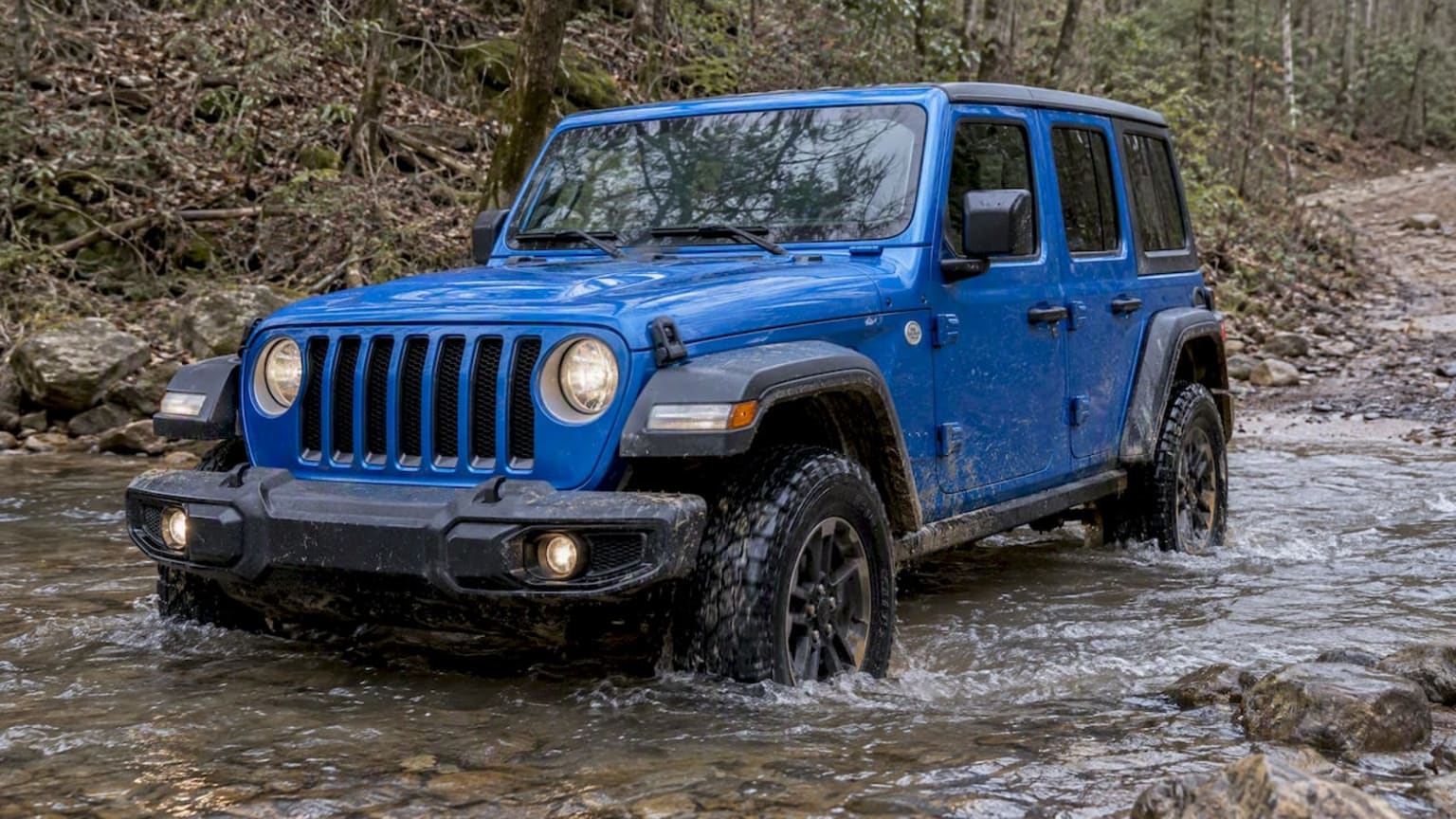
Jeep Trail Rated Meaning: What the Badge Really Tells You
The Trail Rated badge is a small oval on the fender of certain Jeep vehicles. It means that model and trim earned the badge by succeeding against grueling tests in five off-road categories: traction, water fording, maneuverability, articulation and ground clearance. It is a statement about off-road capability. It is not a crash-test score, and it is not a promise that the vehicle will conquer every trail.
Below, we walk through what each category means in plain terms, how the testing works, which Jeeps wear the badge, what to check on a used one, and how to decide whether you need it at all.
Libertychryslerdodgejeep
Find the Jeep That Fits Your Trails
Explore new and pre-owned Jeep vehicles with a dealership that can help with vehicle selection, trade-ins, financing, and service.
TL;DR
Trail Rated is Jeep’s badge for 4x4 models that pass tests in five areas: traction, water fording, maneuverability, articulation and ground clearance.
The badge describes off-road capability only. It says nothing about crash safety, and it does not make a vehicle unstoppable.
Not every Jeep has it. Badge availability depends on model and trim, such as Compass Trailhawk or Gladiator, and it changes by model year.
On a used Jeep, confirm the badge, the trim and the equipment on the actual vehicle rather than assuming.
If your driving is pavement, rain and the occasional dirt road, a non-badged Jeep may suit you just as well.
Table of Contents
What the Trail Rated badge means
Jeep describes the badge as a certification that a 4x4 vehicle has put up results against a series of demanding tests in five performance areas. Those vehicles are engineered for harsh, unpredictable conditions, from rough terrain to heavy snow.
The method behind it is older than most people realize. Stellantis describes the approach as established by NATC and Jeep R&D to give a repeatable, consistent measure of off-road performance. In practice that means the badge is not a marketing label stuck on any trim with a bigger tire. It is tied to a specific list of hardware and test results.
The short version for a shopper: when you see the badge, the vehicle was built to a higher off-road standard than the same model without it.
The five tested categories, one by one
Here is what each category covers, based on Jeep’s own description, with what it means when you are actually behind the wheel.
Category | What Jeep says it covers | What it means on the trail |
|---|---|---|
Traction | Grip in harsh, unpredictable conditions | Power keeps reaching the ground on loose dirt, mud, snow and wet rock |
Water fording | Sealed electrical connections and body openings, higher air intake | Shallow creek crossings and deep puddles are less likely to knock out critical components |
Maneuverability | Precision steering and optimized wheelbases | Easier to place the vehicle on tight, rocky or wooded paths |
Articulation | Wheels stay stable and engaged | Tires keep contact when one side climbs a rock or rut |
Ground clearance | Maximized angles to clear rocks and logs | Fewer scraped bumpers and underbodies on obstacles |
Traction
Traction is the one most owners feel first. It is about whether the vehicle can keep moving when the surface gives up: gravel, sand, packed snow, slick clay. Jeep’s own write-up ties it to features such as a two-speed transfer case and all-terrain tires on Trail Rated models, which are the kind of hardware that separates a capable 4x4 from an all-wheel-drive crossover that is mainly tuned for rain and snow on pavement.
Water fording
Water is where badge-level engineering earns its keep. Sealed electrical connections and body openings, plus a higher air intake, are meant to protect components when you wade through a stream or a flooded dirt road. Here along the Georgia coast, where heavy summer storms can leave low roads under standing water, that is not an abstract benefit.
One practical note: sealing helps the vehicle, but it does not make water crossings free. Wet brakes lose bite for a moment afterward, and owners who cross water often tend to look at pads and rotors built for wet conditions. If you drive an older Wrangler, a Jeep Wrangler brake kit with ceramic pads and moisture-managing design is one example of the aftermarket approach to keeping pedal feel consistent in rain, snow and cold. Test your brakes gently right after you leave the water, and have them inspected if anything feels off.
Maneuverability
A capable vehicle that cannot fit between two trees is not very useful. Jeep points to precision steering and optimized wheelbases here. A shorter wheelbase helps on tight switchbacks, while a longer one adds stability. The badge reflects that the combination suits the vehicle’s intended terrain.
Articulation
Articulation is how far the suspension lets each wheel move up and down independently. When one front tire climbs a rock, you want the opposite tire to stay planted and still pulling. Jeep says the goal is wheels that stay stable and engaged. More articulation generally means more grip over uneven ground.
Ground clearance
Clearance covers more than the number between the road and the axle. Approach, breakover and departure angles decide whether the bumpers and underbody clear a ledge, rock or log. Jeep describes it as angles maximized to clear obstacles, which is why a Trailhawk or Rubicon often looks visibly different from its base sibling.
How a Jeep earns the badge
Jeep says the process begins in its research and development departments, continues in the icy temperatures of northern Michigan and finishes among the boulders of the Rubicon Trail. It also includes computer-simulated evaluations.
Two things are worth knowing about this:
The methodology is proprietary. Reporting on the process notes that the scores a Jeep must hit are not public. You cannot look up a pass mark and compare one badged Jeep to another by number.
The bar has moved over time. Analysts have described the definition of a Trail Rated Jeep as a moving barrier, with technical requirements shifting as engineering and buyer expectations changed. A badge on a model from one era is not a guarantee of identical hardware in another.
The takeaway: treat the badge as a reliable signal that the vehicle was engineered and validated for off-road use, then look at the actual equipment list for the details.
Which Jeeps are Trail Rated
The badge is tied to model and trim, not to the Jeep nameplate. A few current examples from Jeep’s own pages:
Compass Trailhawk. The 2026 Compass Trailhawk has Trail Rated performance and the badge.
Gladiator. Jeep states that the 2026 Gladiator earned the Trail Rated badge through its off-road tests.
Wagoneer. As of 2025, none of the Wagoneer models, including the Wagoneer S, qualify. They are built for comfort and towing rather than the badge.
Other Jeeps have historically carried it too, including the Wrangler, and the Trailhawk trims of the Renegade and Grand Cherokee. Because trims and packages change by year, confirm the badge on the specific vehicle in front of you. Our 2026 Jeep model lineup overview and Jeep trim levels guide show how trims stack up, and our off-road capability features guide goes deeper into the hardware.
What the badge does not mean
This is the part many short explanations skip.
It is not a safety rating. Some dealer blogs describe the badge as a symbol of safety, which blurs two different things. The badge speaks to off-road performance in five categories. Crash-test results and driver-assistance ratings come from separate programs such as the federal NHTSA 5-Star ratings and the IIHS, and you should look those up by model and year if they matter to your decision.
It is not a guarantee for every trail. The tests describe capability under controlled and demanding conditions. Tire choice, driver skill, recovery gear, weather and trail difficulty still decide how a day goes. A Trail Rated Jeep on worn street tires in deep mud is still a stuck Jeep.
It does not make a trim equal to the top off-road trim. A Compass Trailhawk and a Wrangler Rubicon both carry the badge, but they are built for different levels of terrain. Think of the badge as a floor for capability rather than a ceiling.
It cannot be added later. The badge reflects how the vehicle left the factory. Aftermarket lifts and tires can improve capability, but they do not change the certification.
Buying a used Trail Rated Jeep
On a used Jeep, badge availability varies by model and trim, and the badge has become more exclusive over time. For example, the 2016 Grand Cherokee included a Trail Rated badge with its Off-Road Adventure Groups I or II. That is a good reminder that the badge can depend on an option package, not just the model name.
When you shop used, run through this list:
Look for the physical badge on the front fenders, then confirm the trim and package on the window sticker or build sheet.
Ask for the service history. Off-road use is hard on suspension bushings, skid plates, tires and drivetrain fluids.
Inspect underneath. Dents on skid plates are normal. Bent control arms or leaking seals are not.
Check the tires. Mismatched or worn tires undercut the traction the badge is meant to deliver.
Consider certified pre-owned. A certified pre-owned Jeep comes with an inspection process and added coverage, which helps when you cannot know how the previous owner used the vehicle.
If you want to see badged trims in person, we keep Trailhawk models in stock at various times, such as the 2026 Compass Trailhawk new, or pre-owned examples like the 2023 Compass Trailhawk, the 2020 Grand Cherokee Trailhawk and the 2023 Renegade Trailhawk 4x4. Inventory moves, so check the current listings.
Do you actually need a Trail Rated Jeep?
Be honest about how you drive. A quick way to decide:
Your driving | Badge worth it? |
|---|---|
Commuting, errands, highway trips | Probably not essential. Any Jeep with 4x4 or AWD handles rain and light snow |
Dirt roads, beach or hunting access, flooded back roads after storms | Yes, the sealing, clearance and traction hardware pay off |
Regular trails, rocks, mud | Yes, and consider a higher trim such as Rubicon for harder terrain |
Towing and family hauling first | Compare carefully. Some models without the badge are better at that job |
The badge adds real hardware, and that hardware can mean a firmer ride and a different price than the non-badged version. If you will never leave the pavement, you may be paying for capability you will not use. If you will, the badge is a shortcut to the right equipment.
Our perspective
We talk to Jeep shoppers every week in Hinesville, and the badge comes up constantly, usually with the same two assumptions: that it means “safe” and that it means “goes anywhere.” Neither is quite right, and we would rather say so up front than let you find out on a trail.
Our advice is simple. Start with how you will really use the vehicle. Then pick the trim that matches, not the one with the most impressive spec sheet. For many military families and local drivers around Fort Stewart and the coast, a Trailhawk or Wrangler is a good fit because of the wet, sandy and unpaved roads. For others, a non-badged model with the right features is the smarter buy, and we will tell you that.
What we care about is that you leave understanding the vehicle you chose, and that we are still here for service and parts when you need them.
— michael
Find your Trail Rated Jeep with us
If you are comparing trims, we can walk you through them on the lot, show you the badge and the equipment behind it, and help you work out what fits your budget. Browse new and used inventory, see what your current vehicle is worth with our trade-in tool, or look at financing options. Once you own one, our service center and genuine Mopar parts and accessories keep it trail-ready.
FAQ
Does the Trail Rated badge mean a Jeep is safe?
No. The badge measures off-road capability in five categories. Crash safety is rated separately, so check NHTSA and IIHS results for the exact model and year you are considering.
Are all Jeeps Trail Rated?
No. The badge depends on model and trim. Examples include the Compass Trailhawk and the Gladiator, while Wagoneer models do not qualify. Always confirm the badge and trim on the specific vehicle.
Can I add a Trail Rated badge to my Jeep?
No. The badge reflects how the vehicle was engineered and validated at the factory. You can upgrade tires, suspension and protection, but those changes do not make a vehicle Trail Rated.
What are the Jeep Trail Rated standards?
The five areas are traction, water fogding, maneuverability, articulation and ground clearance. The exact pass scores are proprietary and not published, so Jeep describes the categories but not the numbers.