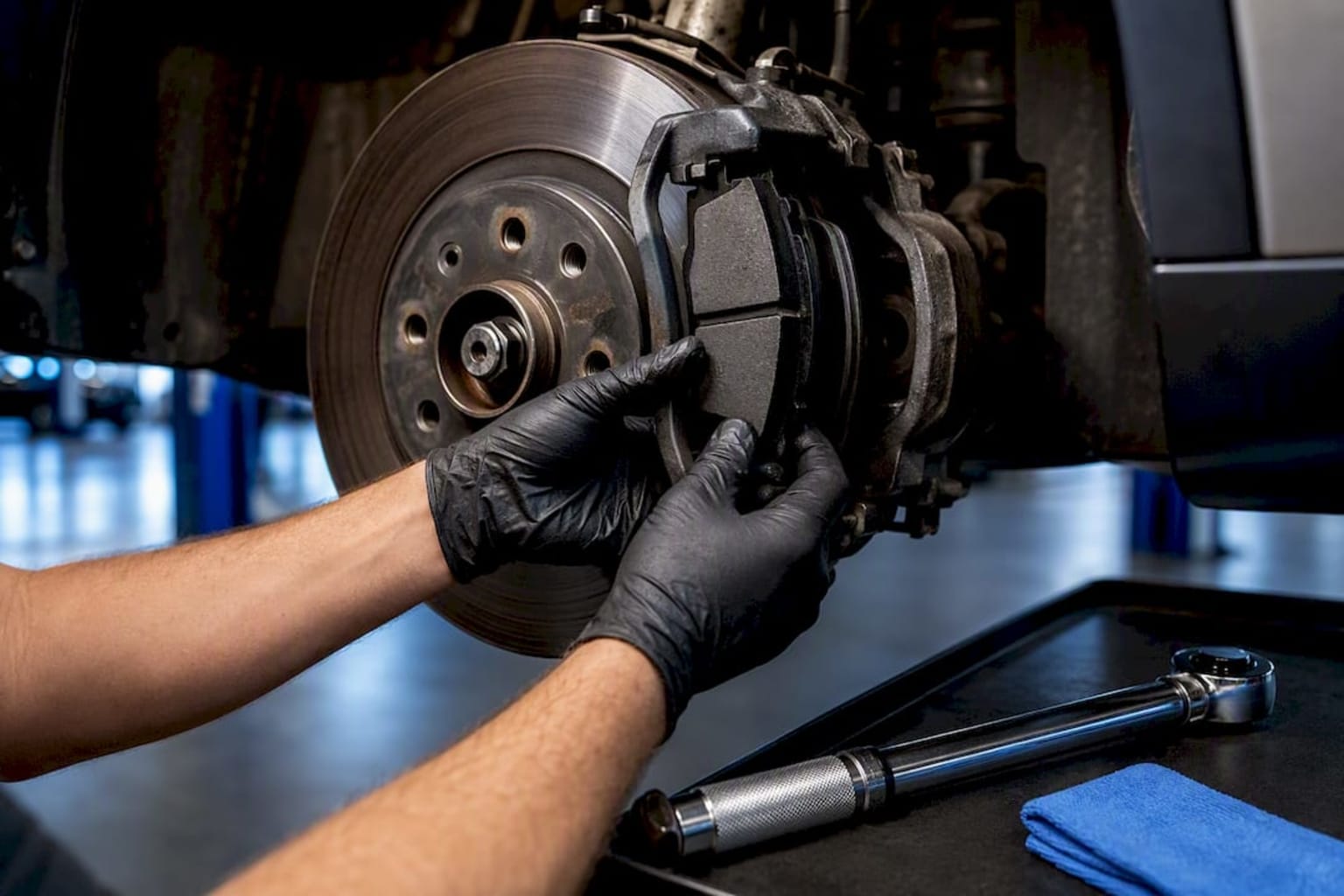
$115–$350 per Axle: U.S. Brake Pad Replacement Cost and Dealer Fees
Expect $115 to $350 per axle if you’re only replacing pads, and $250 to $600 per axle if the rotors need to go too. A full four-wheel job commonly lands between $600 and $1,200. The single biggest swing factor is rotor condition, so check that before you accept any quote at face value.
TL;DR:
Replacing only brake pads generally costs between $115 and $350 per axle, depending on part quality and regional labor rates.
Including rotors raises the total cost to roughly $250 to $600 per axle, with an increasing industry shift toward replacing rotors instead of resurfacing them.
Vehicle class significantly impacts price, with larger or performance vehicles often costing $400 to $900 per axle for parts and labor.
Shop quotes should clearly specify parts, labor hours, and warranty details; beware of vague estimates or rotor replacement without measurement.
DIY brake pad replacement can save money but requires proper tools, safety procedures, and knowledge, especially on vehicles with electronic parking brakes.
Libertychryslerdodgejeep
Keep Your Brakes Ready for the Road
Liberty Chrysler Dodge Jeep Ram provides professional vehicle service with clear communication and personal support after your purchase.
Table of Contents
How Much Does Brake Pad Replacement Cost?
Pads only, done right, cost less than most people expect. Parts typically run $35 to $150 per axle, and labor adds another $80 to $200, putting most pads-only jobs at $115 to $350 per axle according to AutoZone’s cost breakdown. TheHowMuch puts the broader national range at $150 to $350 per axle for pads alone, which tracks closely once you factor in regional labor rates.
Pads plus rotors is a different conversation. New rotors add $60 to $150 per axle in parts alone, pushing the total to roughly $250 to $600 per axle. RepairPal’s average for a full brake pad job across U.S. vehicles lands between $331 and $390, with labor typically $122 to $179 and parts averaging $209 to $211. That average sits comfortably inside the wider ranges above because it blends pads-only and pads-plus-rotors jobs together.
A few common add-ons change the final number:
Calipers (if seized or leaking): $150 to $300 per caliper, parts and labor
Hardware kits (clips, shims, anti-rattle pieces): $10 to $40 per axle
Brake fluid flush: $80 to $150, often recommended alongside rotor work
Rough real-world snapshots: a compact sedan pads-only job often comes in near $150 to $250 per axle, a midsize sedan with rotors climbs to $300 to $450, an SUV or truck with heavier rotors and calipers can hit $400 to $600 per axle, and a luxury or performance vehicle with upgraded rotors easily exceeds $600 to $900 per axle.
Why Do Brake Job Costs Vary So Much?
Vehicle class drives most of the spread. A compact sedan uses smaller, simpler rotors and calipers. A three-quarter-ton truck or a performance coupe with larger brakes and specialty hardware needs more expensive parts and, often, more labor time.
Pad material matters too; for example, ceramic pads cost more upfront, run quieter, and produce less brake dust. Semi-metallic pads are cheaper and handle heat well but wear rotors faster. Ceramic pads cost more upfront, run quieter, and produce less brake dust. Performance pads, common on sport trims, cost the most and are engineered for stopping power under repeated hard braking rather than everyday comfort.
A notable shift in the industry: shops now replace rotors far more often than they resurface them, since new rotors cost little more than machining labor and hold tighter tolerances. That single change is a major reason pads-plus-rotors jobs have become the norm rather than the exception.
Other cost drivers worth knowing:
Dealership labor rates typically run higher than independent shops, though independents vary widely in parts quality
Electronic parking brake systems require a scan tool to release the caliper, adding labor time to rear jobs
Seized or rusted hardware on older vehicles can add 30 minutes to an hour of extra labor
How Do You Compare Brake Repair Quotes?
A transparent quote lists the pad brand and part number, states whether rotors will be replaced or left alone, breaks out labor hours separately from parts, and names a warranty period. If a shop hands you a single lump number with no breakdown, ask for one.
Before you approve any work, ask these five questions:
What brand and part number are the pads, and are they OEM or aftermarket?
Are the rotors being replaced or resurfaced, and why?
What’s the labor rate per hour, and how many hours does this job take?
What warranty covers parts and labor separately?
Is there anything else the inspection found that isn’t in this estimate?
Red flags include vague line items like “brake service” with no parts list, pressure to approve same-day work without a written estimate, and rotor replacement recommended without an explanation of measured thickness. Insist on getting the estimate in writing before work starts.
Pro Tip: Compare the labor hours quoted against RepairPal’s average of roughly $122 to $179 in labor per axle. If a shop quotes double that for a standard sedan, ask why.
Should You Replace Brake Pads Yourself?
DIY brake pad replacement can save real money. Parts alone for a basic sedan run $35 to $150 per axle, so a driveway job might cost a third of what a shop charges for the same axle.
That said, it’s not for everyone:
You need a jack, jack stands, a C-clamp or caliper tool, and basic hand tools
Budget two to three hours per axle if you’re new to it
Vehicles with electronic parking brakes need a scan tool or manual release procedure before the caliper will retract
Skipping a proper brake bleed or torquing lug nuts incorrectly creates real safety risk, and DIY work typically voids any shop warranty
If your vehicle is under warranty or you want OEM parts and documented service history for resale, a dealership visit is usually the safer call, especially on Chrysler, Dodge, Jeep, or Ram models with proprietary hardware.
How Long Do Brake Pads Last?
Front pads typically wear out between 30,000 and 50,000 miles, while rear pads often stretch to 40,000 to 65,000 miles since they handle less stopping force. Your actual mileage depends heavily on driving style and terrain.
Watch for these signs and what they usually mean for your wallet:
A high-pitched squeal often signals a wear indicator has engaged. Fix it now and you’re likely still in pads-only territory
Occasional squealing after rain may just be moisture or debris and often clears on its own, according to Bridgestone’s brake guidance, but persistent noise needs inspection
Grinding metal-on-metal means the pads are gone and the rotors are likely damaged, turning a $150 pads-only job into a $400 to $600 pads-plus-rotors job or worse
Delay long enough and a worn pad can gouge a rotor or seize a caliper, according to TheHowMuch’s cost guide, adding hundreds of dollars to what should have been a routine service.
What Should a Dealership Inspection Include?
New rotors are the standard recommendation once thickness drops near the manufacturer’s minimum spec, since machining removes material a car may not have to spare. Resurfacing is only appropriate when a rotor still has plenty of thickness left and no deep grooves.
A documented inspection should cover:
Pad thickness measurements on all four corners, not just the noisy one
Rotor thickness readings compared to factory minimum spec
Caliper function and brake fluid condition
A written estimate before any work begins
Using Mopar OEM parts and keeping that documentation on file protects your warranty standing and gives a future buyer proof the work was done right.
Pro Tip: Ask for a copy of the measured pad and rotor thickness in writing, even if you’re not replacing anything yet. It becomes your baseline for the next visit.
A Straight Answer on Brake Quotes
The overcharge I see most often isn’t a bad part. It’s a shop quoting rotor replacement without ever measuring the old ones, or padding labor hours on a job that should take half the time. Get the estimate in writing, ask for the pad and rotor part numbers, and don’t sign anything until both are on paper.
— michael
Get Brake Service You Can Actually Verify
A reputable service department gives you what a rushed estimate rarely does: OEM parts, certified technicians, and a documented inspection you can keep for your records. That paperwork matters more than most drivers realize when it’s time to sell or trade in a vehicle with a clean service history.
If you drive a Chrysler, Dodge, Jeep, or Ram and want a written estimate before anything gets touched, a qualified team can walk you through pad thickness, rotor condition, and labor hours before you approve a single line item. It’s the same transparency this guide has been pushing you to demand from any shop. Browse our current Chrysler inventory if you’re weighing a trade-in against repair costs, or call ahead to schedule a brake inspection and get your written estimate started today.
Sources
FAQ
How Much Should Four Brake Pads Cost to Replace?
Four pads for one axle typically cost $35 to $150 in parts, with total pads-only cost per axle (including labor) running $115 to $350 depending on your vehicle and shop rates.
Is $300 a Fair Price for a Brake Job?
Yes, $300 is a reasonable price for a pads-only job on one axle, and it sits within the $150 to $350 per-axle range most shops charge; it’s on the low end if rotors are included.
How Much Is a Brake Job at a Quick-Lube Chain?
Quick-lube chains typically price close to the national averages cited by RepairPal, often $331 to $390 for a standard pads-and-labor job, though rotor add-ons push costs higher.
Why Are Brake Pads So Expensive to Replace?
Labor drives much of the cost since technicians need 30 minutes to over an hour per axle, and rotor replacement, now standard practice at most shops, adds parts cost that resurfacing used to avoid.