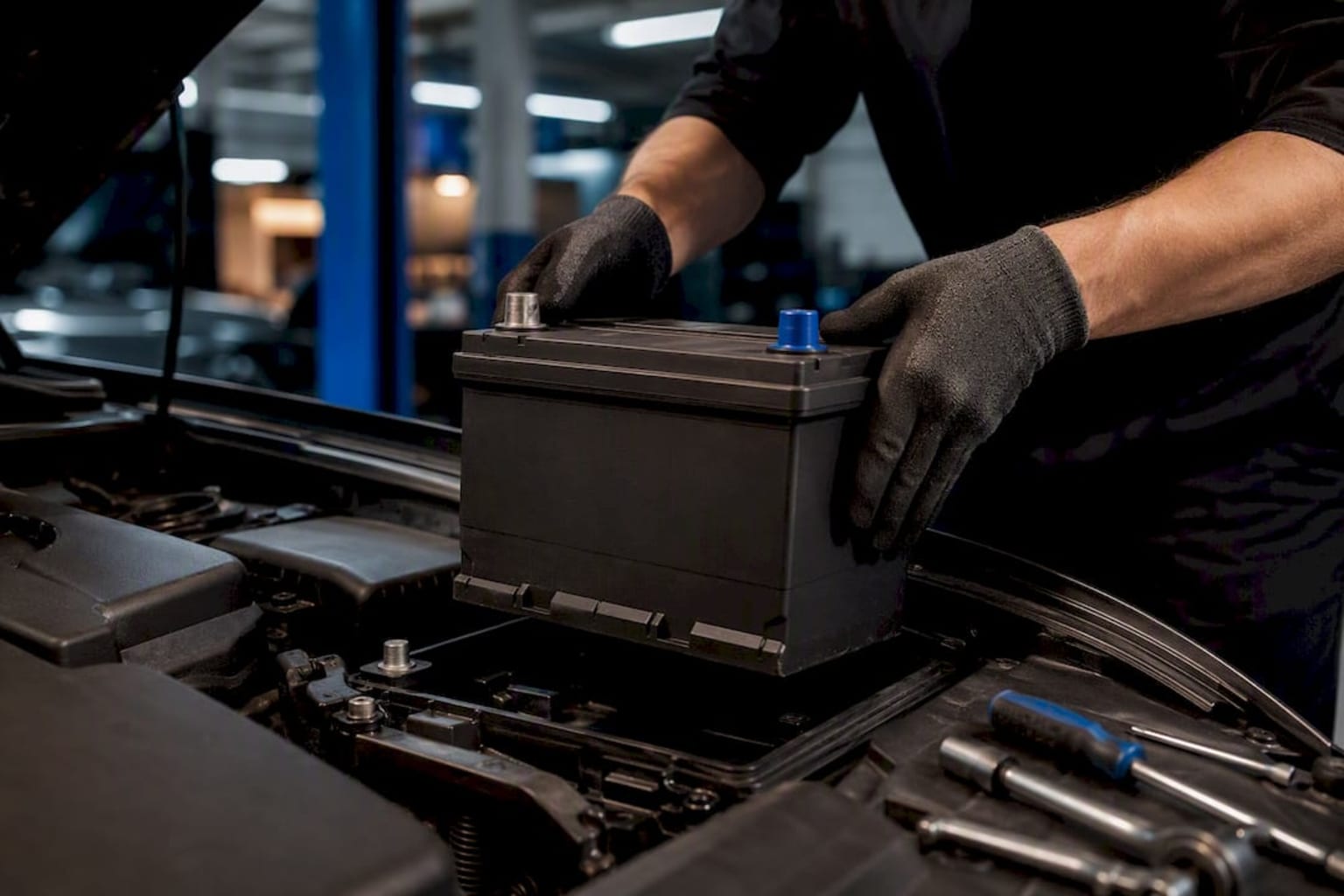
$100–$350 U.S. Car Battery Replacement Cost, Flooded versus AGM
Most drivers pay between $100 and $350 installed for a new car battery, and the single biggest factor is chemistry: a standard flooded battery lands near a moderate price range, while AGM units common in newer vehicles run a higher price range. Buy the battery at a parts store and installation is frequently free, which is the fastest way to trim that number.
TL;DR:
Buying from parts stores and installing the battery yourself can reduce total costs to around $120, with free installation on eligible vehicles.
AGM batteries, needed for start-stop systems, cost more upfront and can push installation prices above $350 for premium models.
Batteries in difficult locations or with advanced systems may require extra labor for registration, computer resets, or terminal cleaning, increasing overall costs.
Choosing OEM-matched batteries and confirming Group Size and CCA from your manual or old battery helps avoid costly returns or misfit issues.
Dealer service provides exact OEM fitment and correct registration, making it the best choice for vehicles with complex requirements or advanced battery management systems.
Libertychryslerdodgejeep
Get Battery Service From People You Trust
Our dealership provides professional vehicle service, clear communication, and support for finding the right solution for your vehicle.
Table of Contents
Battery Replacement Cost Car Owners Should Expect By Scenario
The installed cost for a standard flooded battery typically runs a moderate price range, covering the part and basic labor. AGM batteries, now standard on many start-stop vehicles, push that range to a higher price range because the cells themselves cost more to manufacture and often require a computer reset after install.
Premium or specialty batteries, like those built for European makes or high-amperage trucks, can climb past $350 before labor is even added.
Three quick scenarios show how location changes the math on the same battery:
Parts store, self-purchase: $120 battery plus free install often nets a $120 out-the-door total.
Independent shop: Same $120 battery plus $20 to $50 labor lands around $140 to $170.
Dealer service department: Same battery plus higher shop labor and diagnostic checks often totals $180 to $250, though you get OEM-matched parts and a documented service record.
What Actually Determines Your Price
Two people can price the “same” battery and get quotes $80 apart. Here’s why.
Chemistry drives the biggest gap: flooded batteries are cheapest, AGM costs more upfront but handles deeper discharge cycles better, and both come in different Group Sizes that must physically fit your battery tray. Cold Cranking Amps (CCA) matters too. A battery rated for a small sedan won’t reliably start a diesel truck in freezing weather, so shops price higher-CCA units accordingly.
Some installs cost more simply because of where the battery lives. Trunk-mounted or under-seat batteries, common on certain European and hybrid models, take longer to swap and add labor time. Vehicles with start-stop systems also need computer modules recalibrated after a swap.
Alternator testing (often bundled free with a battery purchase)
Terminal cleaning or corrosion removal
Battery registration/coding for vehicles with battery management systems
Pro Tip: Check your owner’s manual or the sticker on your old battery before shopping. Group size and CCA are printed right there, and matching them exactly avoids a return trip.
Where To Buy And What Installation Actually Costs
Most major parts stores install for free when you buy the battery from them, which can save $20 or more in labor compared to a shop or dealer. That policy usually has conditions: the vehicle can’t have a hard-to-reach battery, and some stores skip free install on trucks or luxury models.
Here’s how the major channels stack up:
National parts chains: Lowest total cost thanks to free installation on eligible vehicles.
Independent mechanics: Modest labor fee ($20 to $50) but better equipped for tricky mounting locations or diagnosing a related electrical issue. Local shops like Kwik Kar Lube & Tune handle quick battery swaps alongside routine maintenance.
Dealership service departments:Charge 20% to 40% more for identical work, but they handle OEM fitment, registration, and system checks in one visit.
Mobile service or AAA: Convenient roadside replacement, priced at a premium for the house call.
Flooded, AGM, EFB, Or Lithium: Which One Do You Need?
Buying the wrong chemistry is the costliest mistake drivers make, and it’s an easy one to avoid once you know what to check.
Standard flooded batteries work fine in older vehicles without start-stop technology, running roughly in a moderate price range installed. They’re the default choice for most sedans built before the mid-2010s.
AGM (Absorbent Glass Mat) batteries are required on most modern vehicles with automatic start-stop, since they handle the frequent deep cycling that stopping and restarting the engine at every light demands. Installing a flooded battery in a start-stop vehicle instead of AGM often leads to early failure within a year or two because the flooded cells can’t recover from that cycling pattern.
EFB (Enhanced Flooded Battery) splits the difference, used on some entry-level start-stop cars. Lithium batteries remain a niche, expensive option mostly seen in performance and specialty applications.
Check your owner’s manual for the required battery type
Look at the label on your current battery for chemistry and Group Size
Ask the parts counter to confirm before you buy, not after
Warranties, Core Charges, And Registration Fees
Warranty codes look confusing, but they’re simple once decoded. A code like 24/84 means 24 months of free replacement, then a prorated discount through month 84. A longer free-replacement window reduces your real risk far more than a longer prorated tail, so compare that first number, not the total.
Most retailers charge a core deposit ($10 to $22) refunded when you hand over your old battery
Nearly every auto parts store and dealer recycles old batteries on the spot
Vehicles with battery management systems, common on newer models, often require registration or coding, adding an additional registration fee to the total
Skip registration on a vehicle that needs it, and the new battery may not charge correctly, leading to a comeback repair.
Is It Really The Battery? How To Confirm Before You Pay
Slow cranking, a dashboard battery light, or dimming headlights at idle all point toward a battery problem, but not always.
Get a free battery test at any major parts store or through AAA’s mobile testing service for members.
Watch for a slow, labored crank versus a click with no crank at all; the second often means the starter, not the battery.
If the new battery dies again within days or warning lights persist after replacement, suspect the alternator or a parasitic electrical draw instead.
A car battery typically lasts several years, with hot climates shortening that closer to three years. If your battery is testing weak well before that window, an underlying charging issue is worth ruling out before you spend on a replacement. A regular maintenance schedule that includes periodic battery testing catches this early.
DIY Battery Swap: What You Save And What You Risk
Doing it yourself saves the entire labor line, often $20 to $120, and the job itself takes most drivers under 20 minutes on an accessible battery.
The risks are real, though. Disconnect the negative terminal first, always, to avoid a short. Wear eye protection since battery acid and sparks are both in play. If your vehicle needs registration after the swap, or the battery sits somewhere awkward like under a seat, that’s a job for a shop or dealer, not a driveway repair.
Confirm the replacement matches Group Size and CCA before starting
Disconnect negative terminal, then positive
Clean corrosion from terminals before reconnecting
Call a professional if your vehicle requires post-install registration
Pro Tip: Take a photo of your battery tray and cable routing before removing anything. It saves guesswork if a clamp or bracket looks unfamiliar going back in.
When Dealer Service Actually Makes Sense
There’s a real case for paying more at a dealership, and it isn’t just marketing. Dealer technicians match OEM specs exactly, handle battery registration correctly the first time, and run a full charging-system check while the vehicle’s already up. For vehicles with start-stop systems or battery management modules, that registration step genuinely matters. Skip it, and you risk premature battery failure or dash warnings that won’t clear.
Dealerships also document the work in your service history, which protects warranty claims down the road, and they recycle the old battery responsibly as part of the visit.
— michael
Schedule Battery Service Or Browse Available Vehicles
If your battery is testing weak or you’d rather have a technician handle registration and system checks correctly the first time, a service department with OEM expertise is built for exactly that. Compared to a generic quick-lube stop, a professional dealership team matches OEM specs, handles the coding newer vehicles require, and can provide a documented service record instead of a handwritten receipt.
Booking is simple: call or use an online scheduler, provide your vehicle’s make and model, and the service team can confirm the right battery before you arrive. Bring your vehicle in with roughly 20 to 30 minutes to spare for testing and installation. Check our service department appointment checklist for what to bring. If you’re due for more than a battery, browse our current Chrysler inventory or explore Ram trucks while you’re here.
Sources
Car Battery Replacement Cost 2026: Full Pricing Guide | Ecostify
Car Battery Replacement Cost in 2026: What You’ll Actually Pay (Pulscar)
FAQ
Is $200 Expensive For A Car Battery?
Not for most vehicles. $200 sits at the higher end of the standard flooded battery range and near the low end for AGM, so it’s typically a fair price rather than an overcharge.
Is $300 Too Much For A Car Battery?
Usually not if you have an AGM battery or a larger vehicle, since AGM installations commonly run a higher price range. It would be high for a basic flooded battery on a small sedan.
How Much Does It Cost To Get A New Car Battery In The USA?
Most drivers pay a moderate price range for a standard flooded battery and a higher price range for AGM, installed.
How Much Does AutoZone Charge To Replace A Battery?
Major parts chains generally install the battery for free when you purchase it there, though policies can exclude certain vehicles with hard-to-reach battery locations. Confirm eligibility with the specific store before you buy.