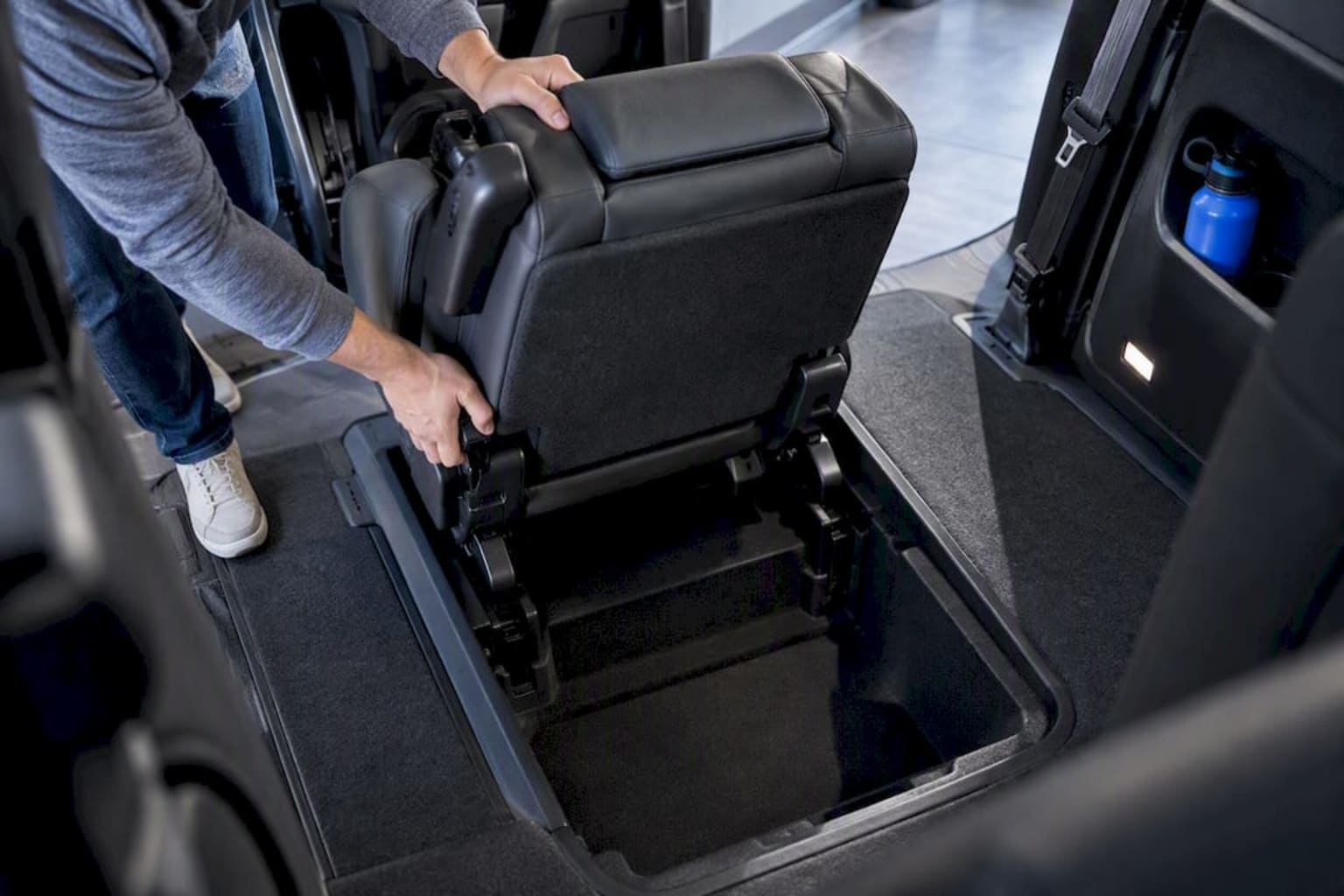
Dealer View: Stow 'n Go Seats for Families, Which Trims Offer It
Stow 'n Go seats are Chrysler’s built-in seating system that lets second- and third-row seats fold flat into floor bins, turning a full passenger van into an open cargo bay in seconds without removing a single seat. The payoff is speed and space: no lifting seats out to the garage, and up to 140.5 cubic feet of cargo room when everything’s folded down. For anyone shopping a minivan for both hauling kids and hauling gear, this is the feature that decides the purchase.
TL;DR:
Up to 140.5 cubic feet of cargo space is possible when all seats are folded flat into the floor wells, tailored for heavy hauling or moving gear.
The seats fold into integrated wells with a redesigned, one-hand mechanism introduced in 2011, making folding quick and easy without leaving the vehicle.
Second-row Stow 'n Go is standard on some trims but not available on top-tier Pinnacle and hybrid models, which use removable or fixed captain’s chairs.
Proper seat stowing requires checking for loose items and lowering headrests to prevent jamming or damage during folding.
Routine maintenance involves inspecting straps and latches, clearing debris from floor bins, and verifying recall status via VIN to ensure safety and functionality.
Libertychryslerdodgejeep
Find the Right Family Vehicle
Explore new and pre-owned Chrysler, Dodge, Jeep, and Ram vehicles with straightforward guidance from a family-focused local dealership.
Table of Contents
What Makes Stow 'n Go Different From Other Folding Seats
Most minivans and SUVs ask you to either remove seats entirely and store them in the garage, or fold them onto themselves in a lumpy stack that eats cargo height. Stow 'n Go skips both problems. The seats drop straight down into wells built into the floor pan, so the load surface stays flat and the seats never leave the vehicle.
Chrysler has marketed this as a class-exclusive feature since it debuted, and the numbers back up the claim as more than marketing talk. By its 20-year mark, the system had shipped in roughly 5 million minivans, with gas-powered Pacifica models supporting around 243 distinct seating configurations. That is a lot of ways to rearrange one vehicle.
What sets it apart in practice:
Seats fold flat without ever leaving the vehicle, so there’s no lifting, no garage storage, no scratched knuckles.
The cargo floor stays level, which matters when you’re sliding in a dresser or a mountain bike.
Floor bins double as hidden storage when the seats are upright, so the space isn’t wasted on shorter trips.
How the Folding Mechanism Actually Works
Under the floor, each stowable seat sits above a molded storage well shaped to match the seat’s folded profile. Pull the release, and the seat cushion and backrest rotate down and tuck into that well, leaving a flush, carpeted surface behind. Early versions took two hands and a bit of muscle. In 2011, Chrysler redesigned the folding mechanism so most seats fold with one hand and a single motion, which is the version you’ll find in current Pacifica and Voyager models.
The second and third rows do not behave identically. Here’s the general sequence for stowing a row:
Recline the seatback fully so it lies flat against the cushion.
Pull the stow strap or handle, which releases the seat from its upright latch.
Rotate the folded seat forward and down into its floor well.
Press down until it seats fully and locks flush with the floor.
Third-row seats generally fold in one continuous motion. Second-row buckets fold similarly, though captain’s chairs need the armrests tucked in first or they won’t clear the well opening.
Pro Tip: Before you fold any row, check the floor bin for stray items. A phone charger or a forgotten toy left in the well can jam the seat halfway down, and that’s an annoying way to find out your kid’s water bottle was down there.
Which Pacifica and Voyager Trims Include It
Third-row Stow 'n Go comes standard across every Pacifica trim, so that part of the equation never changes regardless of which version you’re looking at. Second-row availability is where shoppers need to pay attention.
Second-row Stow 'n Go is standard on the Pacifica Select and Pacifica Limited trims, along with the Chrysler Voyager.
The Pacifica Pinnacle trim and the Pacifica Plug-In Hybrid’s second row don’t get Stow 'n Go. The Pinnacle uses removable second-row captain’s chairs instead, and the hybrid’s battery packaging under the floor rules out the stow wells for that row, according to Chrysler’s own trim FAQ.
Before you buy, confirm second-row capability on the window sticker, run the VIN, or check a dealer’s inventory listing.
If second-row flexibility matters to your routine, that trim distinction is worth more attention than horsepower or trim badges.
Why Families Actually Use This Feature
The cargo number gets the headlines. Up to 140.5 cubic feet with every row stowed is enough for a full living room’s worth of furniture, and floor bins add a place to hide valuables or muddy gear when the seats are up.
The bigger win is how fast you can switch modes. A soccer practice pickup with five kids, a bag of gear, and a folding table doesn’t require choosing between people and cargo. You fold one seat, not the whole row, and the rest of the van stays exactly as it was.
Three common setups show the range:
Cargo-first: Both rows stowed for a full sheet of drywall, a bike, or moving boxes.
Carpool mode: Third row up for extra kids, second row stowed for backpacks and instrument cases.
Mixed family trip: One second-row seat stowed for a stroller, the rest of the seating intact for passengers.
That kind of on-the-fly reconfiguring is the entire point of the Chrysler family minivan lineup, and it’s the reason so many families cross-shop Pacifica against everything else in the segment.
How to Stow and Deploy the Seats the Right Way
Before folding anything, clear the floor bin, pull out loose items from the seat pockets, and make sure seat belts aren’t twisted or dangling near the hinge.
Recline the seatback flat against the cushion.
Pull the stow handle or strap to release the seat latch.
Fold the seat forward and push it down into the floor well until it clicks flush.
To bring it back up, grab the strap, lift the seat out of the well, and pull it upright until it locks into place.
Check that the seat belt buckle is accessible and the latch is fully engaged before loading passengers.
Two things trip people up the first few times. Headrests sometimes need to be lowered before the seat clears the opening, and floor mats left in the well can block a full stow. If a seat won’t lock flat or won’t lift back up smoothly, stop forcing it and get it looked at.
Pro Tip: If a seat feels stuck halfway, don’t muscle it. A frayed strap or a bent latch is a quick fix at a dealer service department, but forcing a jammed mechanism can turn a minor fix into a seat-track replacement.
Keeping the System Working: Maintenance and Recall Checks
Routine care is simple but easy to skip. Check the fold straps for fraying, make sure the latches click solidly instead of catching halfway, and clear the floor bins occasionally since spilled drinks and sand tend to collect down there.
Inspect straps and latches every few months, especially if you fold the seats often.
Wipe out floor bins and check that drainage points aren’t clogged with debris.
Search your VIN on Mopar’s recall lookup periodically, since seat-related bulletins do get issued from time to time.
Order replacement straps, latches, or seat hardware through Genuine Mopar parts rather than generic aftermarket substitutes.
Mopar’s recall and parts tools exist specifically so owners can verify safety bulletins and source components that match factory specs, which matters more for a moving mechanical seat than for static ones.
A Quick Look at Stow 'n Go’s Track Record
Stow 'n Go launched for the 2005 model year, and the 2011 redesign brought the one-hand folding motion most owners know today. Two decades later, the system has been installed in roughly 5 million minivans and offers about 243 seating combinations on gas-powered Pacifica models. That track record matters for used-market buyers too. A mechanism refined over 20 years and millions of units tends to hold up better than a first-generation feature, and it shows in how well older Stow 'n Go vans still function on used lots.
A Dealer’s View on Who Actually Needs This Feature
We point families toward Stow 'n Go–equipped trims when their routine involves regularly switching between passengers and cargo, not just occasional trips to the hardware store. The tradeoff is usually second-row flexibility versus the Pinnacle’s premium captain’s chairs, and that’s a personal call, not a universal answer. Shoppers should verify exact trim configuration against the window sticker before committing, because assuming a Pacifica has second-row stow capability without checking is a common mistake.
— michael
Ready to Find a Stow 'n Go–Equipped Pacifica or Voyager?
A trusted dealer can provide an opportunity to fold the seats yourself before buying. Instead of guessing whether a listing has second-row stow capability, you can walk our lot, sit in a Select or Limited trim, and see the floor bins in person.
Browse our new Chrysler inventory to compare Pacifica and Voyager trims side by side, or check current new Pacifica stock directly. If you’re weighing a used option, our certified pre-owned inventory includes Stow 'n Go models at a lower price point. Once you’ve found the right van, our team can walk you through financing options built around your budget, and if you’re trading in a current vehicle, get a trade-in value before you visit so you know where you stand. Already own a Stow 'n Go minivan that needs attention? Our service department handles everything from strap replacements to full inspections using genuine parts.
Sources
FAQ
Which Cars Have Stow 'n Go Seating?
Stow 'n Go is exclusive to Chrysler’s minivan lineup, specifically the Pacifica and Voyager. Third-row Stow 'n Go is standard on every Pacifica trim, while second-row availability depends on which trim you pick.
Do All Pacificas Have Stow 'n Go Seating?
No. Every Pacifica gets third-row Stow 'n Go, but second-row Stow 'n Go is standard only on Select and Limited trims. The Pinnacle trim uses removable second-row captain’s chairs instead, and the Plug-In Hybrid’s second row skips it due to battery placement under the floor.
What Year Did Chrysler Start Stow 'n Go Seating?
Chrysler introduced Stow 'n Go for the 2005 model year. The mechanism got a major update in 2011 that simplified folding to a single one-hand motion, which is the version used in current models.
How Do You Use Stow 'n Go Seats in a Chrysler Pacifica?
Recline the seatback flat, pull the stow strap to release the latch, then fold the seat forward and press it down into the floor well until it locks flush. To restore the seat, lift it out by the strap and pull it upright until it clicks into its upright position. If you’re unsure whether a specific Pacifica has second-row capability, checking inventory listings or the window sticker confirms it before you buy.