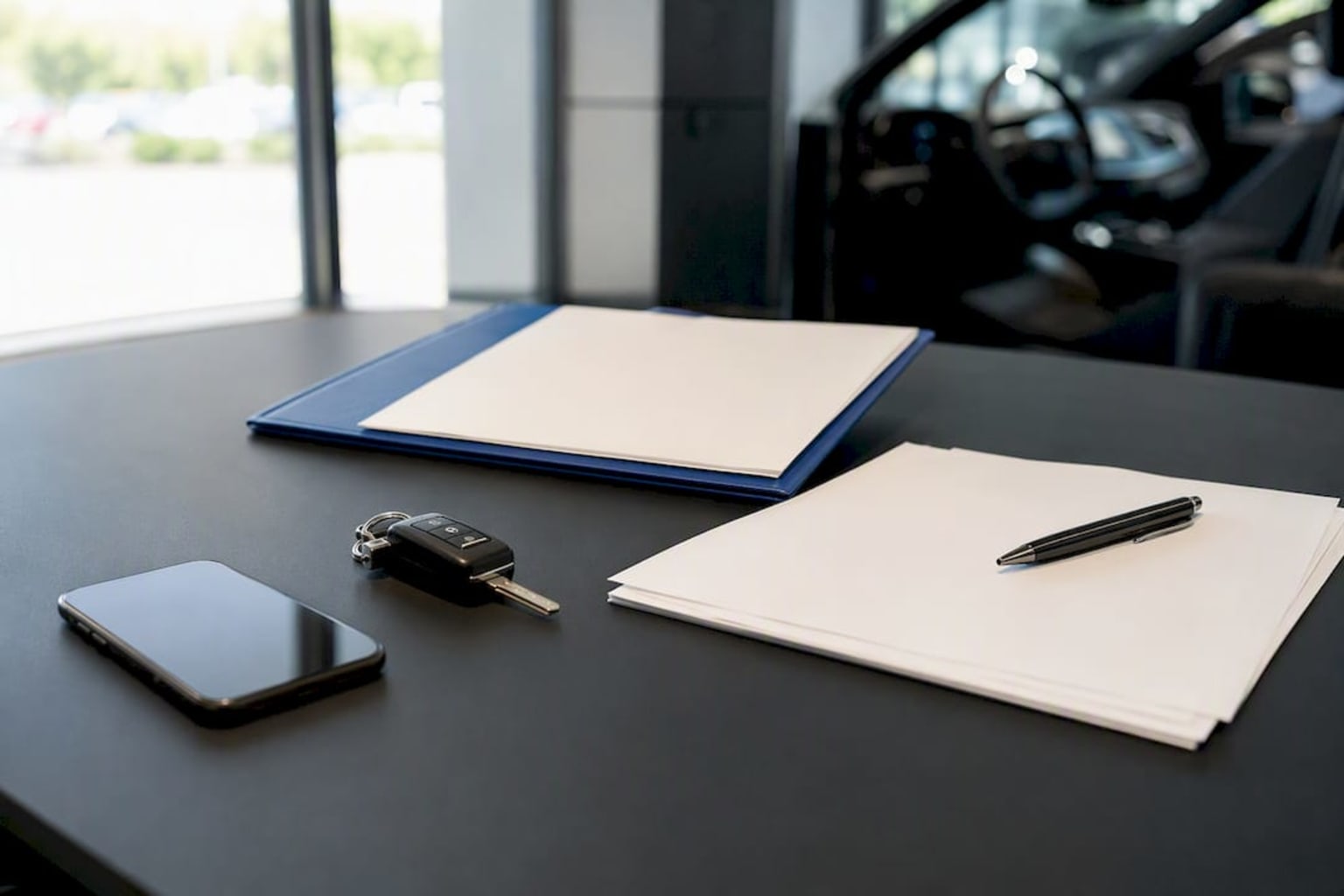
Get These Documents Ready Before You Buy a Car
Four things get most buyers out the door with keys in hand the same day,: a valid driver’s license, proof of auto insurance, a payment method or lender preapproval letter, and (if you’re trading in) your title and registration. Miss any one of these and you’re looking at a second trip.
Here’s the fast version before we go deeper:
Driver’s license or state photo ID. Required for the test drive and for the dealer to run your credit or verify your identity on the paperwork.
Proof of insurance. Most dealers won’t let you drive off without it, whether that’s a physical card, a digital app screen, or a binder from your agent.
Payment or preapproval letter. Cash buyers need a cashier’s check or verified funds; financed buyers need a preapproval letter listing loan amount, APR, and expiration date.
Trade-in title and registration, if you’re trading in a vehicle, plus your payoff information if you still owe a balance.
Missing paperwork is the single biggest reason a “quick” dealership visit turns into a two-hour wait or a rescheduled appointment. Before you leave the house, call your insurance agent to confirm coverage on the new vehicle and check that your preapproval letter hasn’t expired.
Key Takeaways
Most dealership delays come from a missing document, an expired preapproval letter, or a name and address that doesn’t match across your paperwork.
Point | Details |
|---|---|
Bring the core four | ID, proof of insurance, payment or preapproval letter, and trade-in title if applicable. |
Match names everywhere | Verify your name and address are spelled identically on every document you bring. |
Line up insurance early | Call your agent before visiting so coverage or a binder is ready the day you buy. |
Review before signing | Confirm the buyer’s order and retail installment contract show identical numbers. |
Let the finance team help | Libertychryslerdodgejeep’s finance specialists can review your documents and coordinate with your lender before your visit. |
Table of Contents
Trading in a car? Here’s the paperwork that speeds up the deal
Buying from a private seller: what extra paperwork do you need?
How to prepare documents for car purchase at the dealership
The four items above get you in the door. What actually gets you to a signed contract is a longer list, and most of it exists because dealership finance offices are legally required to verify who you are, what you earn, and what you owe before they’ll process a loan or title transfer.
Start with identification. Bring your driver’s license and, if you have one, a secondary ID like a passport or military ID. The name and address on your license need to match what’s on your insurance card and your credit application. A mismatch, even a typo, can stall the finance office while someone tracks down the right spelling.
Insurance comes next. A dealership checklist built around common requirements always lists proof of insurance near the top, because most dealers won’t release a vehicle without it. If you’re financing, your lender will likely require comprehensive and collision coverage, not just liability; for help with loans on specialty vehicles, check out Off Road Vehicle Financing Made Simple. Call your agent before you go; adding a vehicle by VIN once you’re at the lot works in a pinch, but arranging it in advance avoids delay entirely.
For payment, know your limits. Cashier’s checks and certified checks are standard for down payments; personal debit cards often cap out well below what you’ll need for a meaningful down payment.
Preapproval letter or lender contact, including loan amount, APR, and expiration date.
Proof of income: recent pay stubs, a W-2, or two years of tax returns if you’re self-employed.
Proof of residency: a utility bill or bank statement less than 60 days old.
Discount documentation: military ID, recent-graduate paperwork, or an employer/membership discount letter if you qualify.
VIN or vehicle listing, especially for used cars, so insurance and title work can start immediately.
Pro Tip: Keep PDFs of every document on your phone and bring one printed copy of each. Double check that your name and address are spelled identically across your ID, insurance card, and pay stubs. It’s a small thing that causes an outsized number of delays.
What financing documents do lenders and dealers require?
If you’re not paying cash, the finance office is going to ask for a specific stack of paperwork, and having it ready before you sit down can cut your time at the dealership significantly.
Your preapproval letter matters more than most buyers realize. Getting preapproved for an auto loan gives the dealer a rate to beat and speeds up the whole financing conversation. Make sure the letter includes the loan amount, the APR, and an expiration date. Dealer financing offers a similar path if you’d rather compare rates on the spot; our guide to applying for dealer financing walks through what the application actually asks for.
Bring these in order:
Preapproval letter, if you have one, with amount, rate, and expiration visible.
Proof of income: two recent pay stubs, W-2s, or two years of tax returns for self-employed buyers.
Proof of residence and matching ID for the credit check, such as a utility bill or lease.
A copy of your own credit report, so you can flag any discrepancy the lender’s pull might miss.
Co-signer paperwork, if applicable: your co-signer needs to be present with photo ID, Social Security number, and proof of income.
Trading in a car? Here’s the paperwork that speeds up the deal
Trade-ins run into more paperwork snags than any other part of the transaction, mostly because the title is often not in the buyer’s hands or not fully paid off.
Bring your signed title and current registration. If the title is lost, request a duplicate from your state’s DMV before your appointment; most take a few business days, so don’t wait until the morning of. If there’s still a loan balance, get your account number and a payoff quote valid for several days from your lender. Dealers need that exact figure to structure the trade correctly. Our trade-in walkthrough covers payoff timing in more detail.
Bring both sets of keys, remotes, the owner’s manual, and any service records. If the title lists two owners, both typically need to sign, or one needs a limited power of attorney.
Pro Tip: A clean interior and a folder of service records can bump your trade-in offer. Appraisers notice maintenance history more than buyers expect.
Buying from a private seller: what extra paperwork do you need?
Private-party sales skip the dealer’s finance office, but they don’t skip the DMV, and that’s where buyers get tripped up.
You need the title signed over by the seller, with the odometer reading disclosed where your state requires it. A bill of sale should list both parties’ names, the VIN, sale price, date, and odometer reading; some states require one to register the vehicle at all, per a private-party paperwork checklist. If the title shows a lien, confirm it’s released before you hand over payment. Buying across state lines adds one more wrinkle: check your home state’s smog or emissions rules before you commit.
What you’ll actually sign at the dealership
Two documents carry the real weight in a dealership sale: the buyer’s order and the retail installment sale contract. The buyer’s order lists the negotiated price, trade-in credit, fees, and taxes. The retail installment contract is the actual loan agreement, and its numbers need to match the buyer’s order exactly. If they don’t, ask why before you sign anything.
Check every financing disclosure line by line: APR, loan term, total amount financed, and any add-ons rolled into the loan like GAP coverage or an extended warranty. Watch for “payment packing,” a practice where a dealer adjusts loan terms or slips in products to hit a target monthly payment instead of showing you the real out-the-door cost.
The FTC’s own consumer guidance is blunt on this point: buyers should never let themselves be rushed through signing, and should request an itemized breakdown of the buyer’s order and every financing document before putting pen to paper.
Pro Tip: Ask for printed copies instead of signing on a tablet, and take your time on every page. Verify the VIN and odometer statement match the vehicle you drove.
Confirm the buyer’s order price matches the retail installment contract.
Question any add-on you didn’t ask for.
Request an itemized breakdown of every fee and tax line.
What happens after you sign: title, tags, and inspections
Once the paperwork is signed, the dealer typically handles the title and registration filing, but you still leave with responsibilities. You’ll need your signed title (or the dealer’s assignment paperwork), proof of insurance, and payment for taxes and fees if the dealer doesn’t collect them upfront.
Expect your permanent title to arrive by mail within a few weeks, though the exact window depends on your state DMV’s processing speed. If you bought out of state, check that state’s emissions or safety inspection rules before you drive home. Keep your temporary registration tag, insurance card, and a copy of the sale paperwork in the glovebox until the permanent documents arrive.
What causes most car-buying paperwork delays?
Nearly every delay traces back to one of three things: a missing document, an expired preapproval letter, or a mismatch between names and addresses on different forms.
The fix is mostly proactive. Contact your insurance agent before you leave home so coverage or a binder is ready the moment you need it, rather than scrambling from the finance office parking lot. If you’re financing, get preapproved and bring complete, current proof of income and residence. Missing a document doesn’t have to stop the sale: a payoff quote valid for several days can usually be requested online or by phone within minutes, and most state DMVs let you start a duplicate title request the same day online.
Ask for an itemized buyer’s order and take copies of everything you sign. That single habit, backed by FTC consumer guidance, catches more pricing errors than any other step in the process.
Pro Tip: Save PDFs of your license, insurance card, pay stubs, and preapproval letter to your phone, then bring one printed copy of each as backup.
From our dealership: how we help customers finish paperwork smoothly
We walk customers through document collection and title transfer every day, and we’d rather answer your questions before your visit than after. Check our online forms and pre-visit checklists, or call ahead with anything you’re unsure about.
Let our finance team handle the paperwork heavy lifting
Getting every document lined up on your own is doable, but it’s also the part of car buying most people dread. Libertychryslerdodgejeep’s finance specialists coordinate directly with your lender, review your trade-in payoff details before you arrive, and can process electronic document uploads so half the paperwork is handled before you ever sit down at the desk.
That means less time double-checking forms in the lobby and more time actually picking out your vehicle. If you’re eyeing a new or used model, browse our Jeep inventory or Dodge inventory online, then call ahead so our team can review your documents and have your paperwork pre-staged before you walk in. We’ll also help track down anything you’re missing, from a payoff quote to a duplicate title request, so your visit doesn’t turn into a second trip.
Frequently Asked Questions
What documents do I need to buy a car? At minimum: a valid driver’s license, proof of auto insurance, and a payment method or lender preapproval letter. Add your title and registration if you’re trading in a vehicle, and proof of income and residency if you’re financing.
How long does it take to prepare documents for a car purchase? Gathering the core paperwork usually takes under an hour if you already have insurance and income documents on hand. Add a few days if you need a duplicate title or a loan payoff quote from your lender.
What if I’m missing my car title for a trade-in? Request a duplicate title from your state DMV as soon as possible; most processing windows run a few business days, so start before your dealership appointment, not the morning of.
Do I need proof of insurance before test driving a car? Most dealers ask to see proof of insurance before letting you test drive, and definitely before you drive a purchased vehicle off the lot. Contact your agent ahead of time to confirm coverage or get a binder ready.
What’s the difference between a buyer’s order and a retail installment contract? The buyer’s order lists the negotiated price, trade-in credit, fees, and taxes. The retail installment contract is the actual loan agreement; its figures need to match the buyer’s order exactly before you sign.