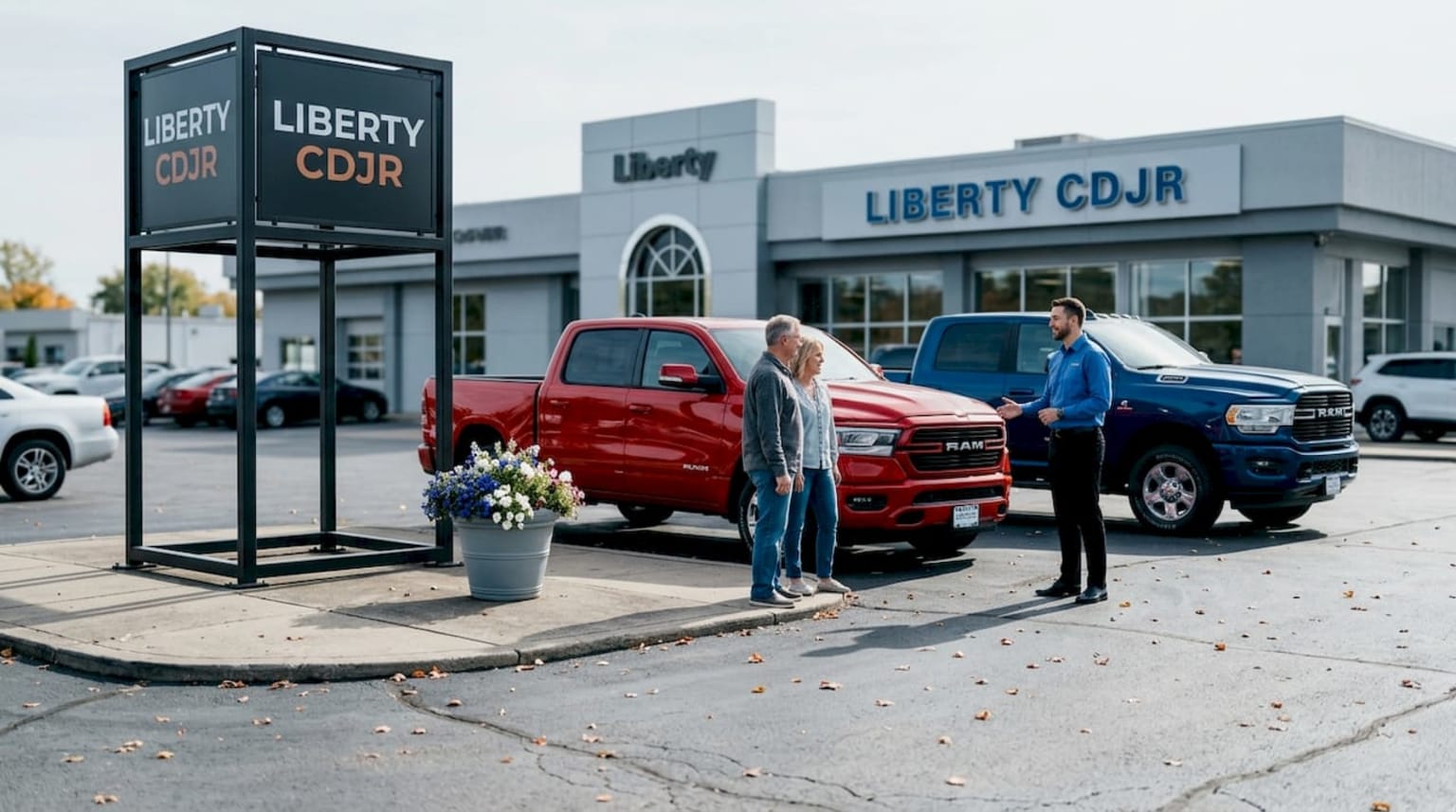
Light Duty vs Heavy Duty Truck: 2026 Buyer's Guide
Light Duty vs Heavy Duty Truck: 2026 Buyer’s Guide
The difference between a light duty and heavy duty truck is defined by gross vehicle weight rating (GVWR), the maximum safe operating weight of a fully loaded vehicle including passengers, cargo, and trailer tongue weight. According to FHWA truck classification, Classes 1 and 2 cover light duty trucks with GVWRs up to roughly 8,500 lbs, while Classes 7 and 8 define heavy duty trucks at 26,001 lbs and above. This single number shapes everything from engine options and towing capacity to fuel economy and legal compliance. Whether you are eyeing a Ram 1500 for weekend adventures or a Ram 3500 for serious hauling, understanding this classification is the fastest way to avoid buying the wrong truck.
What is the difference between light duty and heavy duty trucks?
GVWR is the foundation of every truck classification decision, and it is not just a number on a sticker. It represents the total weight a truck can legally and safely carry, including the vehicle itself, every passenger, all cargo in the bed, and the tongue weight of any trailer you attach. Truck duty classifications serve as an engineering organizing principle, not just a marketing label, which is why they matter far more than the name on the tailgate.
The Federal Highway Administration divides trucks into eight classes based on GVWR:
Class 1: GVWR up to 6,000 lbs (small pickups, compact trucks)
Class 2: GVWR 6,001 to 10,000 lbs (Ram 1500, Chevrolet Silverado 1500, Ford F-150)
Class 3: GVWR 10,001 to 14,000 lbs (Ram 2500, Silverado 2500HD, often called “heavy duty pickups”)
Classes 4 through 6: Medium duty commercial trucks
Classes 7 and 8: Heavy duty trucks including semi-trucks and large commercial rigs
Truck Class | GVWR Range | Common Examples |
|---|---|---|
Class 1-2 (Light Duty) | Up to 10,000 lbs | Ram 1500, Ford F-150, Silverado 1500 |
Class 3 (Heavy Duty Pickup) | 10,001 to 14,000 lbs | Ram 2500, Silverado 2500HD, F-250 |
Class 4-6 (Medium Duty) | 14,001 to 26,000 lbs | Box trucks, large vans |
Class 7-8 (Heavy Duty) | 26,001 lbs and above | Semi-trucks, dump trucks |
One important note: when truck buyers and dealerships use the term “heavy duty,” they almost always mean Class 3 pickups like the Ram 2500 or Ram 3500, not Class 7 or 8 commercial rigs. The FHWA class grouping provides the most reliable boundary, which matters when manufacturers use overlapping marketing terms like “Super Duty” or “Heavy Duty” that do not map directly to federal classifications.
How do towing, payload, and engine specs compare?
The practical gap between light duty and heavy duty pickups shows up most clearly in three numbers: payload capacity, towing capacity, and engine output. These figures determine whether a truck can handle your actual workload safely.
A light duty truck like the 2026 Chevrolet Silverado 1500 carries a payload range of 1,520 to 2,260 lbs and a maximum towing capacity around 13,300 lbs depending on engine and cab configuration. Those are strong numbers for recreational use, light construction, or towing a mid-size travel trailer. Heavy duty pickups like the F-250 or Silverado 2500 series exceed those limits significantly, with towing capacities that can push past 20,000 lbs and payload ratings well above 3,000 lbs in properly configured trims.
Engine options reflect this gap directly. Light duty trucks typically offer a range of gasoline V6 and V8 engines, plus turbocharged four-cylinders and hybrid options that prioritize fuel efficiency. Heavy duty trucks add diesel powertrains, such as the 6.7L Cummins Turbo Diesel in the Ram 2500 and 3500, which deliver the torque needed to move heavy loads without straining the drivetrain.
Spec | Light Duty (Ram 1500 / Silverado 1500) | Heavy Duty (Ram 2500 / Ram 3500) |
|---|---|---|
GVWR | Up to ~10,000 lbs | 10,001 to 14,000+ lbs |
Max Payload | ~1,500 to 2,260 lbs | ~3,000 to 7,000+ lbs |
Max Towing | Up to ~13,300 lbs | Up to ~35,000+ lbs |
Engine Options | Gas V6, V8, turbo-4, hybrid | Gas V8, diesel inline-6 |
Fuel Economy | Better city/highway average | Lower mpg, higher torque |
Fuel economy and maneuverability favor light duty trucks in everyday driving, while heavy duty trucks trade those advantages for raw capacity. A Ram 1500 is noticeably easier to park, navigate in traffic, and fill up than a Ram 3500 with a diesel engine.
Pro Tip: Always check the specific trim and configuration for payload and towing numbers. A Ram 1500 with a larger cab and shorter bed will have a different payload rating than a regular cab version of the same model.
What are the best use cases for each truck type?
Choosing between a light duty and heavy duty truck comes down to what you actually haul, tow, and drive on a weekly basis. Buying more truck than you need costs money in fuel and purchase price. Buying less truck than you need creates safety risks and potential legal liability.
Light duty trucks are the right choice when:
Your primary use is daily commuting, family transportation, or light cargo hauling under 1,500 lbs.
You tow a boat, small camper, or utility trailer that stays well under 10,000 lbs.
Fuel costs and parking convenience matter in your day-to-day routine.
You want a truck that handles like a large SUV rather than a commercial vehicle.
Your budget favors a lower purchase price and lower operating costs.
Heavy duty trucks are the right choice when:
You regularly tow a fifth-wheel RV, large horse trailer, or heavy equipment trailer.
Your work involves construction, landscaping, or any job requiring consistent heavy payloads.
You need a diesel engine for long-haul towing efficiency and torque.
Your trailer exceeds 13,000 lbs gross weight on a regular basis.
Commercial or agricultural use demands maximum durability and load ratings.
The most common mistake buyers make is ignoring how tongue weight affects GVWR. A trailer’s tongue weight, typically 10 to 15 percent of the trailer’s total weight, counts against your truck’s GVWR just like a bag of concrete in the bed. Add two passengers and a full fuel tank, and a light duty truck can reach its GVWR limit faster than most buyers expect.
Pro Tip: Before buying, write down your heaviest expected load scenario: passengers plus cargo plus tongue weight. Compare that total against the GVWR of any truck you are considering. If you are within 10 percent of the limit regularly, move up a class.
How to evaluate specific truck models and configurations
Comparing trucks at the model level is not enough. Two trucks with the same name can have dramatically different capabilities depending on cab style, bed length, engine choice, and drivetrain. Payload and towing capacities vary widely by configuration, so reviewing the exact trim before purchase prevents costly surprises.
Here is what to check for every truck you are seriously considering:
GVWR: Found on the door jamb sticker. This is your legal and safety ceiling.
GCWR (Gross Combined Weight Rating): The maximum weight of the truck plus a loaded trailer. Critical for towing decisions.
Payload capacity: Listed in the owner’s manual and on the door jamb. Subtract passengers and fuel weight from this number to find your actual cargo allowance.
Maximum towing capacity: Always listed for a specific configuration. Verify it matches your cab, engine, and axle ratio.
Axle ratio: Higher numerical ratios (like 3.92 or 4.10) improve towing but reduce fuel economy.
Tow package: Many trucks require a factory tow package to achieve maximum towing ratings.
The Ram truck towing capacity guide from Libertychryslerdodgejeep breaks down 2026 Ram configurations in detail, which is useful when comparing specific setups side by side. Testing different trim configurations before purchase reflects the broad variability even within a single model line.
Key terminology and common misconceptions
Truck marketing language creates real confusion for buyers, and some of the most widely used terms are the least accurate.
The “ton” rating system is the biggest source of misunderstanding. A half-ton truck does not carry 1,000 lbs of payload. A one-ton truck does not carry exactly 2,000 lbs. Ton ratings are legacy marketing labels that originated decades ago when payload capacities were much lower, and modern trucks far exceed those original numbers. A Ram 3500 configured for maximum payload can carry well over 7,000 lbs, which is 3.5 times its “one-ton” label.
Other terms that mislead buyers:
“Super Duty” (Ford’s F-250/F-350 branding) is a marketing name, not a federal classification.
“Heavy Duty” in a dealership context usually means Class 3 pickups, not Class 7 or 8 commercial trucks.
“Max Tow Package” increases towing capacity but does not change GVWR or payload.
“HD” trim level on a light duty truck refers to a trim package, not a duty class upgrade.
Overloading a truck beyond its GVWR is not just a performance issue. It compromises braking distance, suspension integrity, and tire load ratings, and it can void your warranty and insurance coverage in the event of an accident.
Always use GVWR as your reference point rather than ton ratings or marketing names. The door jamb sticker is the most reliable source of truth on any truck you are evaluating.
Key takeaways
The single most reliable way to choose between a light duty and heavy duty truck is to calculate your maximum real-world load, including passengers, cargo, and trailer tongue weight, and compare it against the GVWR of each truck you are considering.
Point | Details |
|---|---|
GVWR defines duty class | Light duty trucks top out near 10,000 lbs GVWR; heavy duty pickups start above that threshold. |
Tongue weight counts against GVWR | Trailer tongue weight plus passengers plus cargo must all stay within GVWR for safe, legal operation. |
Ton ratings are not payload specs | Half-ton and one-ton labels are legacy marketing terms that do not reflect actual payload capacity. |
Configuration changes the numbers | Cab size, engine, axle ratio, and tow package all affect payload and towing within the same model line. |
Match truck to your heaviest use case | Buy for your most demanding regular scenario, not your average trip, to avoid overloading risks. |
What I have learned from watching buyers choose the wrong truck
Buyers consistently underestimate how quickly GVWR adds up in real-world use. I have seen people purchase a light duty truck because the advertised towing capacity covered their trailer’s gross weight, only to realize later that two adults, a full tank of fuel, and a toolbox in the bed pushed them over the limit before they even hitched up. The math is not complicated, but it requires doing it before you sign the paperwork, not after.
The other pattern I notice is buyers going too heavy because they want a margin of safety. That instinct is reasonable, but a Ram 3500 diesel is genuinely harder to live with daily if you are not using its capacity regularly. Fuel costs more, parking takes more thought, and the ride quality on an empty heavy duty truck is noticeably stiffer than a light duty equivalent. The right answer is almost never the biggest truck available. It is the smallest truck that handles your heaviest regular load with a reasonable safety margin.
My practical advice: test drive both a Ram 1500 and a Ram 2500 back to back before deciding. The difference in how they feel on the road is significant, and that daily driving experience matters as much as the spec sheet. If you are on the fence, calculate your actual GVWR usage scenario in writing. Numbers on paper make the decision much clearer than gut feel at the lot.
— michael
Find your next truck at Libertychryslerdodgejeep
Libertychryslerdodgejeep carries both light duty and heavy duty trucks across the 2026 Ram lineup, and the team is equipped to walk you through GVWR, payload, and towing specs for every configuration on the lot. Whether you are looking at a 2026 Ram 1500 Laramie for daily driving and light towing or a 2026 Ram 3500 Tradesman for serious hauling work, the inventory covers both ends of the spectrum.
Browse the full truck inventory at Liberty CDJR to compare available trims, configurations, and pricing. The sales staff can help you match GVWR and towing specs to your specific needs so you leave with the right truck, not just a truck that looks right on paper.
FAQ
What is the main difference between light duty and heavy duty trucks?
The core difference is GVWR. Light duty trucks fall in Classes 1 and 2 with GVWRs up to roughly 10,000 lbs, while heavy duty pickups like the Ram 2500 and Ram 3500 exceed that threshold with significantly higher payload and towing capacities.
Does a half-ton truck actually carry half a ton?
No. Ton ratings like half-ton, three-quarter-ton, and one-ton are legacy marketing labels that do not reflect actual payload capacity. A modern Ram 1500 can carry well over 2,000 lbs depending on configuration, which already exceeds the literal half-ton label.
What counts against a truck’s GVWR?
Everything in and on the truck counts against GVWR, including passengers, fuel, cargo in the bed, and the tongue weight of any trailer you are towing. Exceeding GVWR creates safety risks and can void warranty and insurance coverage.
Can a light duty truck tow a large travel trailer?
A properly configured light duty truck like the Ram 1500 can tow up to approximately 13,300 lbs, which covers many travel trailers. However, buyers must verify that tongue weight plus passengers and cargo stays within the truck’s GVWR before towing.
How do I know which truck class is right for my needs?
Calculate your maximum real-world load scenario: add your heaviest cargo, all passengers, and the tongue weight of your trailer. If that total approaches or exceeds the GVWR of a light duty truck, a heavy duty pickup is the safer and more appropriate choice.
Recommended
Ram Truck Towing Capacity Examples: 2026 Guide | Liberty CDJR
Used 2024 Chevrolet Silverado 1500 LT (26183267A) for sale in Hinesville GA | Liberty CDJR
Used 2021 Chevrolet Silverado 2500HD LT (26221471C) for sale in Hinesville GA | Liberty CDJR
New 2026 Ram 3500 Tradesman Crew Cab 4x4 8’ Box (26250659) for sale in Hinesville GA | Liberty CDJR