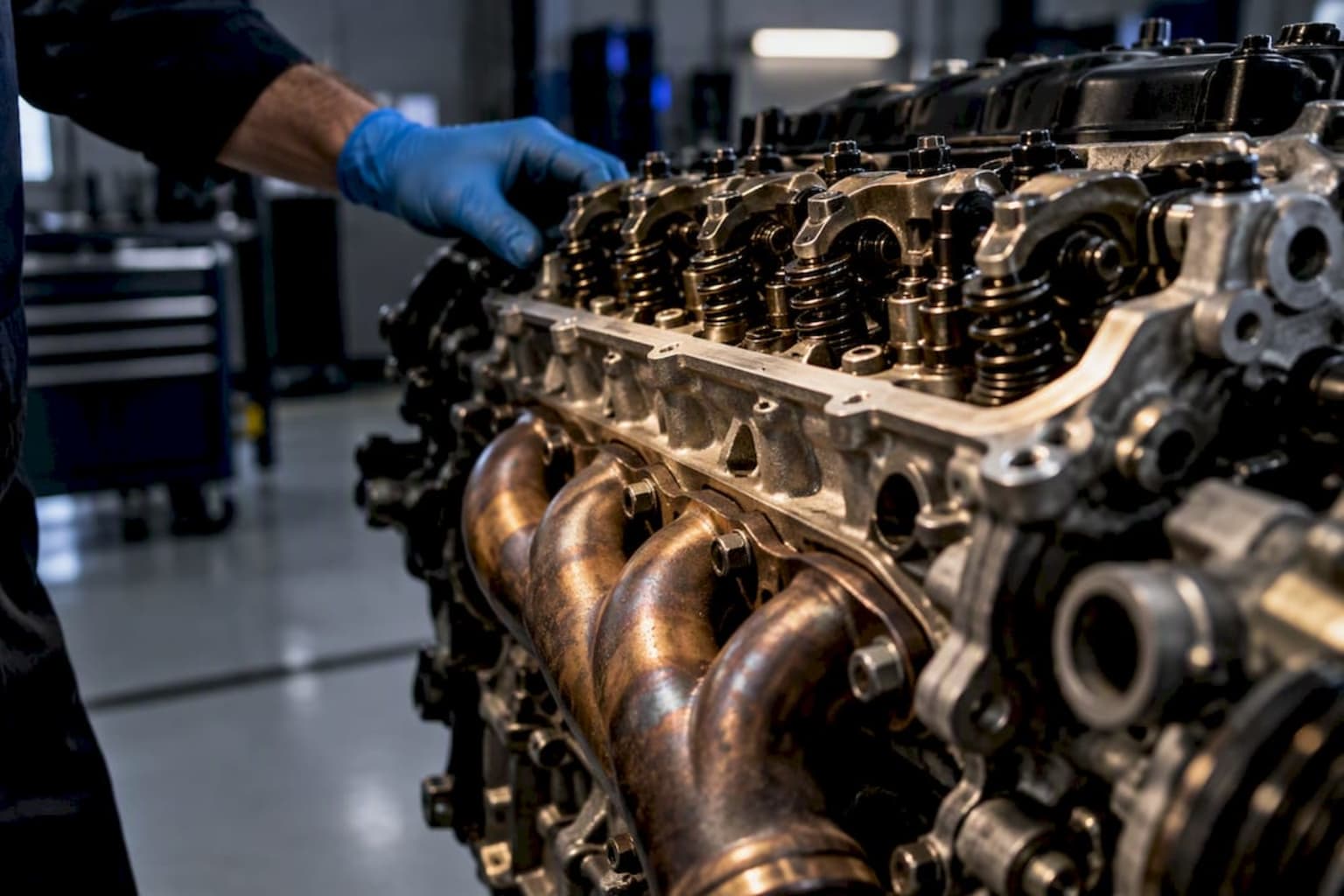
Avoid $6,000 Repair: VIN Specific HEMI Tick Diagnosis for U.S. Owners
A hemi lifter tick usually traces back to one of two things: a broken exhaust manifold bolt letting exhaust gas leak past the head, or a failing roller lifter grinding against the camshaft. The first is a nuisance you can drive on for a while. The second isn’t. If the tick fades once the engine warms up, you’re probably fine. If it persists at idle and gets louder, stop driving it and get it scanned before metal spreads through the oil system.
TL;DR:
A hemi tick is often caused by exhaust manifold bolt leaks or roller lifter grinding against the camshaft, not solely internal valvetrain issues.
The pattern of loud cold noise fading with engine warmth indicates manifold leaks, which are cheaper and easier to fix than internal lifter or cam damage.
Proper diagnosis relies on listening, locating the noise, scanning for misfire codes, and inspecting the oil filter for metal contamination.
Costs range from replacing manifold bolts or gaskets at low expense to a full lifter and cam replacement, with early diagnosis preventing extensive repair bills.
Using the correct oil and maintaining documented service history significantly reduces the risk of lifter failure and subsequent major repairs.
Libertychryslerdodgejeep
Get Your HEMI Tick Checked
Our professional service team can help diagnose vehicle concerns and support you with service after the sale.
Table of Contents
Hydraulic Rattle, Manifold Leaks, Injector Clicks, or Cam Damage: Sorting Out the Real Cause
Get a VIN-Specific Hemi Tick Diagnosis Before It Gets Expensive
What Is the Hemi Tick and Why Do These Engines Make It?
The classic hemi tick sounds like a fast, rhythmic knock, roughly matching half engine speed, coming from somewhere around the top of the engine or the exhaust manifold area. It’s sharper and more mechanical than the softer, irregular click of a fuel injector cycling on and off. Owners describe it as a “marbles in a can” noise, and once you’ve heard a real one, you won’t mistake it for a normal engine hum again.
Part of why this shows up so often on HEMI engines comes down to the valvetrain layout itself. The 5.7 HEMI uses a pushrod design with roller lifters riding against the camshaft lobes, and on engines equipped with Multi Displacement System (MDS), those lifters carry extra internal complexity to allow cylinder deactivation. Stellantis documentation on the modern 5.7 HEMI V8 with eTorque confirms these engines use variable cam timing and cylinder deactivation as standard features, which means more moving parts that depend on clean oil flow and consistent lubrication.
The other common culprit isn’t inside the engine at all. HEMI exhaust manifolds bolt to the cylinder head with bolts that see extreme heat cycling, and those bolts are known to snap or back out over time. When that happens, exhaust gas escapes right at the joint, and it ticks loudest when the metal is cold and the gap is widest, then quiets down as everything expands and seals itself back up.
Hydraulic Rattle, Manifold Leaks, Injector Clicks, or Cam Damage: Sorting Out the Real Cause
Not every tick means the same thing, and lumping them all together is how owners end up either panicking over a $200 fix or ignoring a $6,000 problem. Here’s how the four most common sources actually behave.
Hydraulic lifter rattle shows up almost exclusively at cold start and usually fades within a few seconds to a minute as oil pressure builds and fills the lifters. This is normal wear-and-tear noise, more common on higher-mileage engines or after an oil change when the filter hasn’t fully primed yet. It’s rarely a sign of failure on its own, but if it starts happening every single cold start and lingers longer than it used to, that’s worth mentioning to a technician.
Exhaust manifold leaks are the most frequently misdiagnosed cause of a hemi tick. A broken manifold bolt or a blown gasket produces a loud, sharp tick right at startup that predictably fades as the manifold heats up and expands enough to close the gap. This pattern of “loud cold, quiet hot” is the single strongest clue pointing away from internal engine damage, and it’s generally the cheaper problem to fix of the group.
Injector tick is a different animal entirely: a lighter, more electrical-sounding click coming from the top of the engine near the fuel rail, present at all temperatures and typically not affected by RPM changes the way a mechanical tick is. A failing injector can produce a rougher, more erratic clicking pattern along with a rough idle or a misfire code tied to that specific cylinder.
Roller-lifter and cam damage is the one you don’t want. A seized needle bearing inside a roller lifter creates a persistent, unyielding tick that doesn’t fade with heat and often gets worse the longer the engine runs. Left alone, a seized lifter will grind against the cam lobe it rides on, wearing it down and sending metal shavings through the oil galleries to bearings and other lifters downstream.
It’s tempting to blame MDS every time a HEMI ticks, since the deactivation hardware adds moving parts. But MDS involvement alone doesn’t prove it caused the failure — plenty of non-MDS lifters fail from the same oil starvation or manufacturing defects, and plenty of MDS-equipped engines run their entire service life without an issue.
Pro Tip: If your tick gets noticeably quieter after the engine has run for 60 to 90 seconds, resist the urge to assume you’re in the clear. Manifold leaks fade the same way lifter noise sometimes briefly quiets under oil pressure. The real test is whether it comes back at idle after a full warm-up drive.
VIN-specific differences matter more here than most owners expect. Engine displacement, model year, cylinder deactivation configuration, and even the specific service bulletin history tied to that VIN can change what a technician checks first and which parts are on hand.
A Quick Listening Checklist: Injector Click or Lifter Tick?
Before calling a shop, run through this sequence at idle in a quiet spot, ideally with the hood up and nobody else running the AC or radio.
Note the timing. Does the noise show up cold and vanish within a minute or two, or is it there no matter how long the engine has run?
Locate it by ear. A tick from directly under the valve covers on top of the engine points toward lifters or the cam. A tick from lower and further out, closer to the header pipes, points toward the manifold joint.
Check the rhythm against RPM. A true mechanical lifter tick tracks with engine speed in a steady, repeating pattern. An injector click can feel a bit more erratic and is often more noticeable at idle than under load.
Scan for codes. Pull up your scan tool or have a shop check for cylinder-specific misfire codes in the P0300 family, which often point to either an injector or a lifter on that specific cylinder.
Check for soot or a light smell of exhaust near the manifold. Visible black streaking around a bolt or the manifold gasket seam is a near-certain sign of a leak, not a lifter problem.
Pull the oil filter or drain plug screen if you’re comfortable doing it, or ask a shop to. Metallic glitter in the filter pleats is one of the most reliable signs of active lifter or cam wear.
None of these steps replace a shop visit, but they’ll help you describe the problem accurately, and an accurate description saves diagnostic time and money.
Getting Ready for a Diagnostic Appointment
A technician can localize this noise a lot faster if you show up with information instead of just a description. Before you book anything, gather your VIN, model year, engine displacement, current mileage, and your oil-change history, including whether you’ve been running the manufacturer-recommended oil or something else. A short phone recording of the cold-start noise, taken with the hood open from a few feet away, gives the shop something concrete to reproduce rather than relying on your description alone.
Once you’re in the bay, a competent shop should run through a specific sequence rather than guessing:
OBD-II scan for stored and pending codes, especially anything in the misfire family tied to a specific cylinder.
Stethoscope localization, where a technician places a mechanic’s stethoscope at various points along the valve covers and manifold to pinpoint exactly where the sound is loudest.
Visual and smoke check around the exhaust manifold gasket and bolts for soot streaking or an active leak.
Oil filter and pickup screen inspection for metal contamination, which confirms active lifter or cam wear rather than just suspecting it.
Oil pressure test, since low pressure at idle can starve lifters and mimic or worsen an existing tick.
Pro Tip: If a shop skips the oil-filter inspection and jumps straight to quoting a lifter replacement, ask why. Metal in the filter is the difference between a confirmed diagnosis and an educated guess, and you’re paying for the guess either way.
Certain findings mean the conversation changes immediately. A misfire code in the P0300 series combined with a persistent tick, visible metal in the oil, or a noise that suddenly gets louder over a day or two are all reasons to stop driving the vehicle and get it towed or trailered rather than driven in.
What Repairs Cost and How Urgent Each One Is
The price range for fixing a hemi tick swings wildly depending on which of the causes above turns out to be the real one, and getting an accurate diagnosis before authorizing work is what keeps you on the cheap end of that range.
A manifold bolt or gasket repair is the best-case scenario. It typically involves replacing one or more broken studs, possibly the gasket itself, and re-torquing the manifold to spec. Turnaround is often same-day or next-day at a shop with the right stud extraction tools, since broken bolts can sometimes shear off flush with the head and require careful extraction. This is generally the lower-cost fix of the group and doesn’t touch anything inside the engine.
A lifter-and-cam job is a bigger undertaking. It means pulling the intake, removing the heads or valve covers depending on the extent of access needed, inspecting every cam lobe for scoring, and replacing the affected lifters, often all of them as a set rather than just the noisy one, since if one has failed, others are usually close behind. If the cam lobes themselves show wear, the camshaft gets replaced too. Catching this early, before lobes are visibly worn and before metal has circulated, keeps the job contained to lifters and maybe a cam. Caught late, after lobes are wiped and oil has carried metal through the engine, the damage often extends to bearings and other components, and at that point a remanufactured exchange engine frequently becomes the more sensible option than chasing individual repairs.
A few things push the price in either direction:
Warranty coverage can eliminate most or all of the cost if the vehicle is still within its powertrain warranty window, which is worth checking before authorizing anything out of pocket.
Dealer versus independent labor rates vary, but dealers typically have faster access to OEM lifters, cams, and manifold hardware without waiting on aftermarket backorders.
Genuine parts versus aftermarket matters more on this repair than most, since lifter quality and metallurgy directly affect how long the fix lasts. Sourcing genuine Mopar parts for a lifter or manifold job avoids the fit and durability issues that show up with some off-brand replacements.
If a shop determines an engine replacement makes more sense than piecemeal repair, that’s not an upsell. It’s often genuinely the more cost-effective and lower-risk path once contamination has spread past the valvetrain.
Cutting Your Risk With the Right Oil and Service Habits
Most preventable lifter failures trace back to lubrication, not a manufacturing flaw. Running the correct oil and staying on schedule does more to protect your HEMI’s valvetrain than any aftermarket gadget claims to.
Use the U.S.-recommended oil specification for your specific 5.7 HEMI rather than whatever’s cheapest on the shelf. Stellantis specification documents list exact fluid and oil requirements by model, and Liberty CDJR’s own guidance on the correct oil type for the 5.7 HEMI breaks down why the spec matters more than the brand name on the bottle.
Keep a documented service history, including receipts or digital records of every oil change and interval. This protects you if a warranty claim ever comes up and gives a technician a clear timeline if a tick develops later.
Change the oil promptly if you ever suspect contamination, rather than waiting for the next scheduled interval. Metal particles circulating in old oil accelerate wear on everything downstream.
Be skeptical of aftermarket “MDS delete” kits marketed as a guaranteed tick fix. They disable cylinder deactivation, but MDS presence alone doesn’t confirm it caused the noise in the first place, so deleting it doesn’t guarantee the tick goes away, and it can affect fuel economy and warranty standing.
Pro Tip: If you’re buying a used HEMI-powered truck or SUV, ask for the full oil-change history before you commit. A gap of a few thousand miles between changes early in the vehicle’s life is one of the strongest predictors of lifter trouble down the road.
Choosing Where to Get It Diagnosed
Not every shop runs the full diagnostic sequence, and skipping steps is how misdiagnoses happen. Before you commit to a repair quote, confirm the shop actually recorded the noise, pulled codes, and checked the oil filter for metal, not just listened for thirty seconds and guessed.
Dealers generally have the edge on warranty work, OEM parts availability, and access to VIN-specific service bulletins that flag known issues for your exact build. Independent shops can be faster and sometimes cheaper for straightforward manifold repairs, but a suspected lifter or cam issue benefits from dealer-level diagnostic tooling and parts sourcing. Whichever route you choose, ask upfront how long the diagnostic will take and what happens next if the news is bad, since a lifter job usually means the vehicle sits for at least a day or two once parts are confirmed.
Why VIN-Specific Diagnosis Beats Guessing Every Time
Two HEMI trucks built three years apart can have different lifter designs, different MDS calibrations, and different known service issues tied to their build. That’s why the VIN matters more than the symptom description alone. If metal contamination is even a possibility, stop driving and get it inspected. Documenting the noise, the codes, and the oil-filter findings protects you if you ever need warranty coverage or want to show a buyer the vehicle was handled correctly. A dealership service department can pull OEM parts and put a documented diagnostic trail behind the repair.
— michael
Get a VIN-Specific Hemi Tick Diagnosis Before It Gets Expensive
Guessing at a hemi tick over the phone or from a forum thread is how a $300 manifold fix turns into a $6,000 engine job. A thorough diagnostic includes VIN review, listening to a cold-start recording, an OBD-II scan for misfire codes, stethoscope localization, and an oil-filter check for metal, documented to clarify the diagnosis and costs.
Our service department handles everything from a snapped manifold bolt to a full lifter-and-cam job, and if a repair calls for OEM hardware, our parts department sources genuine Mopar components instead of guesswork aftermarket parts. If the diagnosis points toward a bigger repair and you’re weighing your options, our team can also walk you through financing for a replacement vehicle if that ends up making more financial sense than a major engine repair. Bring your VIN and a short cold-start recording when you schedule, and we’ll get you a straight answer instead of a guess.
Sources
This article draws on Stellantis technical and press documentation for HEMI engine specifications, independent technician guides comparing lifter failure to manifold leaks, and dealer-verified oil-type guidance for the 5.7 HEMI platform.
FAQ
How Common Is the Hemi Tick?
It’s a well-documented issue across HEMI-equipped Chrysler, Dodge, Jeep, and Ram vehicles, though the underlying cause varies widely from a simple manifold bolt to lifter failure. Not every HEMI develops the noise, and among those that do, exhaust manifold leaks are a frequent and less serious cause compared to internal valvetrain wear.
Is a Hemi Tick Covered Under Warranty?
If the noise traces back to a lifter or cam defect and your vehicle is still within its powertrain warranty period, the repair is typically covered. Manifold bolt issues may or may not be covered depending on the specific warranty terms, which is exactly why VIN-specific dealer review matters before you assume either way.
How Much Does It Cost to Repair a 5.7L Hemi Tick?
Cost depends entirely on the cause: a manifold bolt or gasket repair sits at the low end and is often a same-day fix, while a full lifter-and-cam job or a remanufactured engine swap sits at the high end if contamination has already spread. Getting an accurate diagnosis first is what keeps you out of the expensive bracket unnecessarily.
Did Ram Ever Fix the Hemi Tick?
Stellantis has continued refining HEMI valvetrain and cylinder-deactivation hardware across model years, and the current 5.7 HEMI V8 with eTorque reflects ongoing updates to cam timing and MDS engineering. That said, no single design change eliminates every possible cause of a tick, since manifold bolts and individual component wear can still occur regardless of model year.